Explore Style

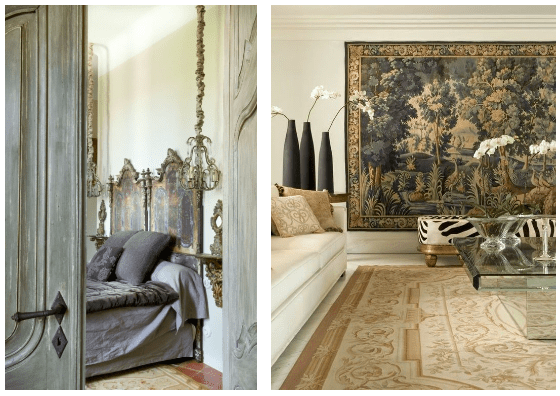
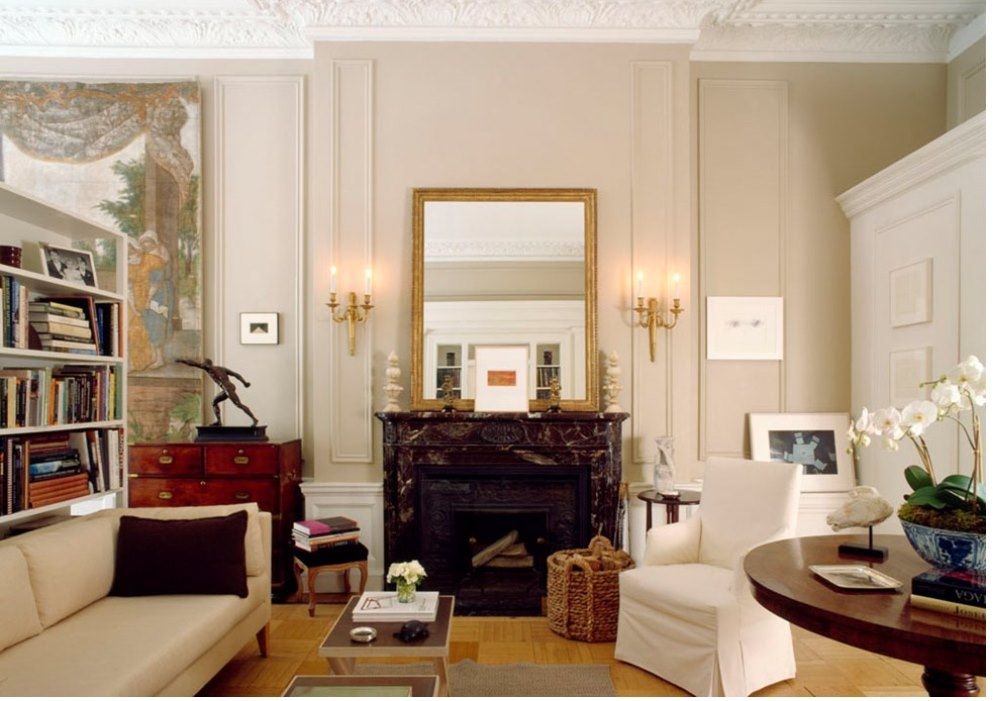
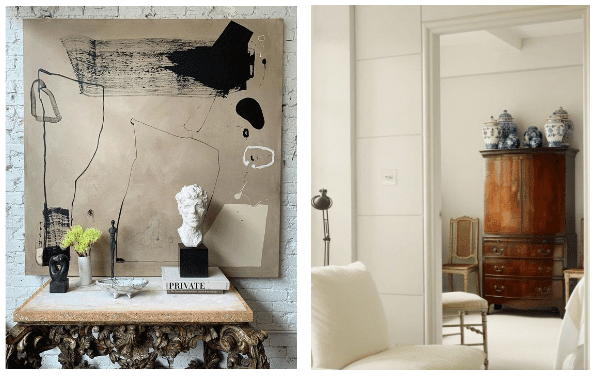
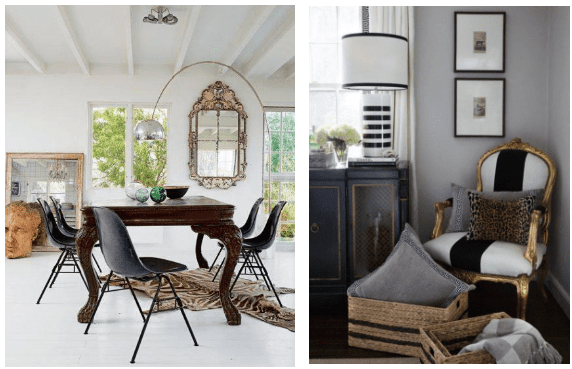
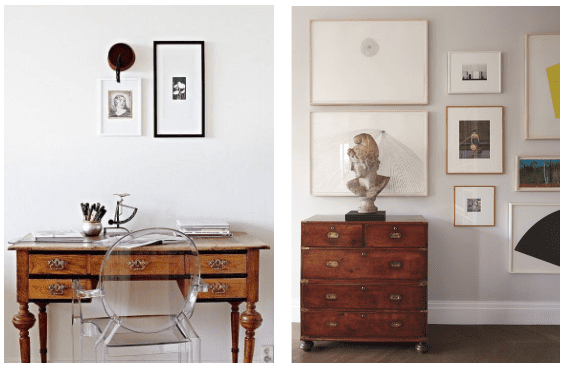
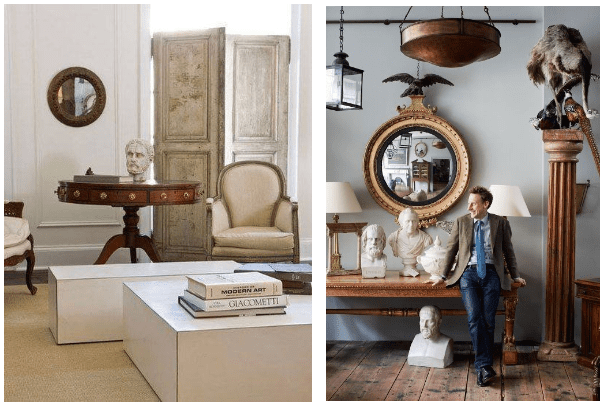
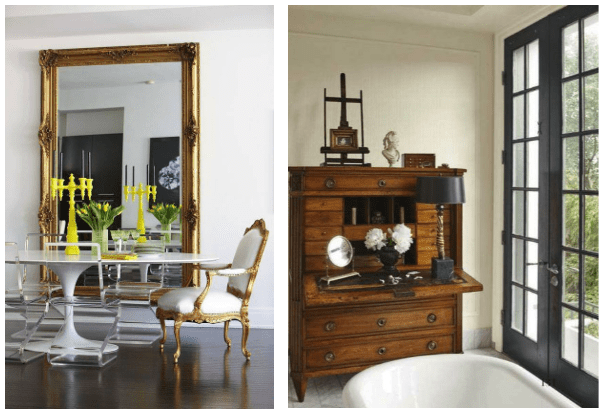
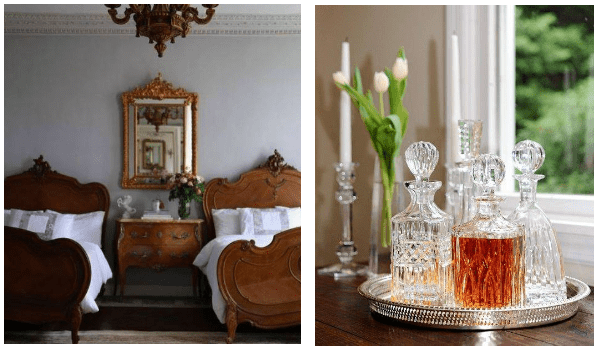
At our antique furniture store, we offer a wide range of styles to choose from, including French furniture, Victorian furniture, and vintage pieces. We believe that every piece of antique furniture has a story to tell, and selecting a style is a great way to bring that history and beauty into your home in a meaningful way. So, whether you’re searching for an antique mirror, an armoire, or a throne chair, consider the importance of selecting a style that reflects your personal style and tastes.

Antique extendable dining tables | Place for everyone

Categories: Articles, Blog, Style|Tags: , , , |

There are dining room tables and then there are extendable dining room tables. Our belief is that furniture choices play a pivotal role when it comes to interior design and creating stylish spaces that speak to longevity and practicality. And so, if you happen to come across an antique extension dining table, grab it with both hands! The double-duty, win-win functionality of these pieces means they will fit perfectly in a smaller space but have the wonderful potential to seat more when an occasion or celebration demands or when unexpected guests arrive for dinner. 

An extension dining table is an invitation to gather and an investment that you will wonder how you ever lived without. 

The practicality of extendable tables

The aesthetic value of antique extendable tables – besides their clever craftsmanship and design mechanisms – is in their artisanal variety. 

  • Drop-leaf extension tables feature hinged leaves that can be folded down when not in use. They can be easily extended by lifting the leaves which provide additional surface area for dining or other activities. 
  • Boasting a distinctive trestle-style base with a removable leaf (or leaves) that can be added to the centre of the table, trestle extension tables offer stability and flexibility whenever the need arises to host additional guests.  
  • A gateleg extension table is characterised by hinged legs that swing out to support the extended leaves making them ideal for large gatherings. 
  • Butterfly leaf extension tables have a unique self-storing mechanism; the leaf is folded and hidden beneath the table’s surface and can be easily unfolded and locked into place when extra seating is required. 

Antique extendable dining tables

The benefits of extendable tables

From an intimate dinner for two or a cosy supper for four to hosting a festive gathering that accommodates more, these pieces of furniture will support all your socialising needs. 

In smaller homes or apartments, extension dining tables become a game changer, offering you the opportunity to maximise your seating space and have everyone over (when necessary) and retract to their smaller size when guests have gone, giving you back your space. 

Coming in a broad range of shapes, sizes and materials, you can either harmonize with your existing decor or take your room design in a completely new direction. And whatever extending table you do decide on, they also become the ideal surface to showcase tablecloths or table runners or to display your tablescaping creativity. 

(If you are partial to a large dining table and would love an antique refectory table but just don’t have the space, then an extension table becomes a wonderful alternative). 

The beauty of extendable tables

Antique extension tables can be seamlessly incorporated into modern spaces, creating a captivating fusion of old and new. Not only do they offer wonderful versatility in seating and room arrangement for dining rooms and kitchens, but they also come in a wide range of designs, materials and styles, upping their timeless decor potential to mix and match antiques with modern styles of furniture

Mix and match antique extension tables in modern spaces

Giving your dining room or kitchen the wow factor simply comes down to showcasing the craftsmanship of a bygone area with an antique extension table. And from an investment perspective, these coveted pieces of antique furniture are highly sought after. 

No matter what your personal interior style is – modern sleek, minimalist simplicity, traditional elegance, or French farmhouse rustic, you can take your pick at the Crown Collection. From a Mid-Century French-Style Regency extendable dining room table or an antique Baroque extending dining table to a Victorian Mahogany (fourteen to sixteen seater) dining table with five extension leaves, our curated collection will suit your design preference, space constraints and budget, and elevate the overall ambience of your home. 

With their varied designs, decorative detailing, materials and patinas, extension tables will always become an elegant focal point (and conversation piece) in your dining room, no matter how many guests you are hosting. 

Pop in at the Crown Collection to browse our coveted selection of antique extendable tables online or in-store at 20 Ballyclare Drive, Bryanston.

Antique sideboards, servers & buffets | The overlooked darlings of interior design

Categories: Articles, Blog, Style|Tags: , , , , |

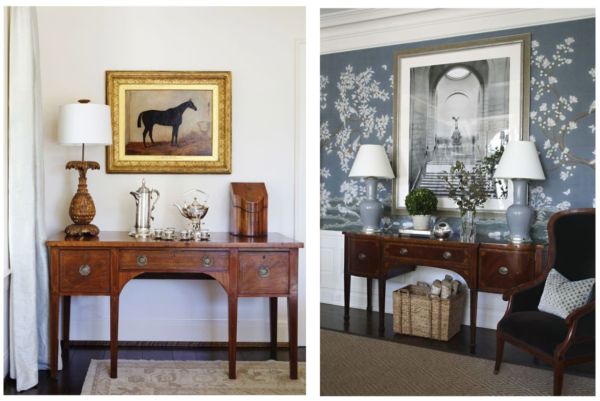
Antique sideboards, servers or buffets – sometimes called credenzas – are perhaps the most overlooked and underestimated pieces of furniture. But we believe they deserve a moment of glory. (And who says they should only be relegated to the dining room?). Coming in many different shapes, sizes and finishes, this is definitely the time to break the rules and reposition a sideboard, buffet or server as the perfect decor investment in multiple rooms of your home.

We do, however, subscribe to William Morris’ one rule: “If you want a golden rule that will fit everything, this is it: Have nothing in your houses that you do not know to be useful or believe to be beautiful.”

Ticking the two key interior design boxes of form and function – useful and beautiful – antique sideboards, servers  & buffets offer you the versatility to either be the hero piece or the sophisticated backdrop for practical storage and stunning displays. They are way more than just a utilitarian solution for traditional dining rooms; stepping up as striking feature pieces that will transform any space from mundane and boring to glorious and eclectic.  

Mix antique servers, sideboards or buffets into modern spaces

Reaching their design peak during the Regency period, sideboards, servers and buffets are elegant, graceful and highly functional furniture forms.

What’s the difference?

When referring to this family of antiques, the terms are often used interchangeably. But there are subtle differences distinguishing them if you want to be specific and show off your antique knowledge. Generally speaking, to qualify as a sideboard, server or buffet, these elongated decorative furniture items will have cabinet-like doors and/or storage draws. (They are also narrower in width than dining or kitchen tables).

  • Sideboards are freestanding with short legs or their base sits directly on the floor. 
  • Buffets have longer legs and are usually larger than a sideboard. Originally designed to serve food, their height is usually counter-level.
  • Servers are typically smaller and lighter in scale with narrow drawers, longer legs and an open bottom. 
  • Credenzas originally didn’t have feet. But, their renewed popularity during the mid-20th century saw them being designed as long, low cabinets with sliding doors. 

Where can they be placed?

The modern-day resurgence of antiques in decor trends has seen the evolution of repurposing furniture from its original design intent. 

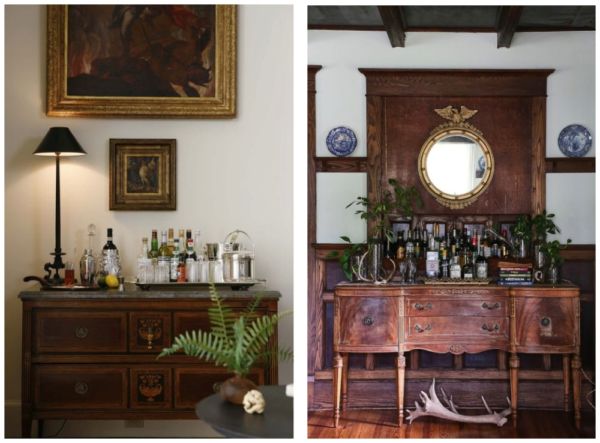
This is where antique sideboards, buffets or servers really come into their own. Originally only found in dining rooms, sideboards and servers are now making a name for themselves in every other room as drinks cabinets, kitchen islands, coffee stations, office storage, TV stands, dressing tables and bathroom vanities. 

Place an antique sideboard or server in your modern space

We dare you to think out of the box when it comes to buying one of these antique pieces and allowing it to redefine your spaces.

How can they be used?

If you’re in search of a piece of furniture that does triple duty (i.e. has storage options, is perfect for displaying collections and looks beautiful), then, depending on the size of your space, an antique sideboard, buffet or server ‘steps up to the plate.’ 

  • Dramatic displays: With iconic drinks stations having a revival, and silver trays – with antique glass, silverware or candle collections – making a comeback, there isn’t a better piece of furniture to showcase in a modern home than a sideboard or server. (And if you’re not into gin and tonic, craft whisky or custom spirits, then a coffee station will look just as inviting). Also, given their countertop height, they remain the ideal item for ‘serving’ tea and food. 
  • Stylish storage: The craftsmanship of antique sideboards, servers and buffets includes shallow drawers and/or cupboards; perfect for storing linens, serving plates, silverware and cutlery. (And that is just in the dining room). If you are brave enough to add a server or sideboard to your bathroom as a vanity, you can store towels and toiletries. In a bedroom, they make the perfect dressing tables and in a study, they provide a little extra ‘out is sight’ organization. Used as TV stands, their storage options hide a whole lot of living room paraphernalia. 

The versatility of antique sideboards in any home

Where can I find one? 

It’s really easy to fall in love with these unsung heroes of interior design. Their stunning beauty and versatility clearly make them pieces of interest for a broad target group of buyers. 

At the Crown Collection, our handpicked and curated collection of sideboards, servers and buffets (and the odd credenza) is ready to wow you. We are on a mission to give these furniture items the attention we believe they deserve in the antique world. 

Browse online or visit our showroom at 20 Ballyclare Drive, Bryanston.

(Our in-store restorers can stain, bleach or gild any item to your personal preference).

Grandfather clocks | Timeless statement pieces in modern spaces

Categories: Articles, Blog, Style|Tags: , , , |

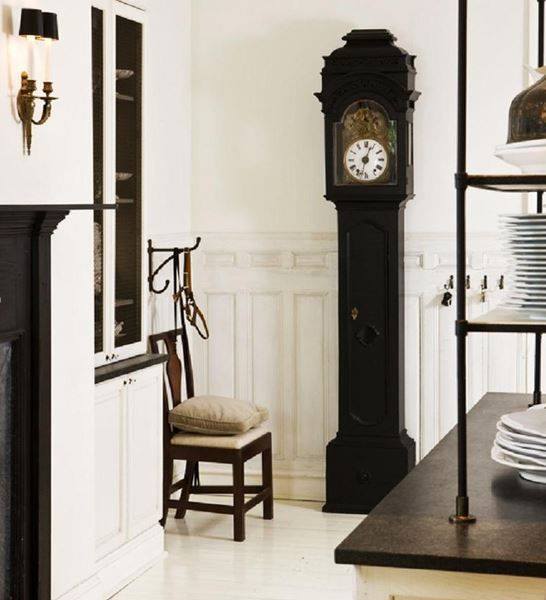
Nothing says ’grand’ in decor lingo better than a Grandfather clock (aka a Longcase clock). Posing as functional and classical pieces of history, these decorative pendulum-swinging timepieces have earned their rightful place in the aesthetics of contemporary interior design. With a nod to ‘Grandmillenial’ style – a term coined by Emma Bazilian from House Beautiful – antique Grandfather clocks perfectly fit the collaboration brief of incorporating a seemingly traditional and outdated piece of furniture into sleek, modern surroundings. 

“The grandfather clock told a tale of old fashioned craftsmanship, a tale of an age when things were expected to last not a season but generations.”Angela Abraham, writer, philosopher, a leading authority on Social Evolution and CEO of the literary platform, Descriptionari. 

The resurgence of mixing and matching modern design with antiques celebrates the craftsmanship and sustainable storytelling qualities of specialist artisans. Standing tall, Grandfather clocks are obvious showpieces of this art form. 

Mix and match grandfather clocks with modern design

Aside from the comforting and rhythmic ticking and chiming in the background, a Grandfather clock seamlessly takes centre stage as a featured antique piece. 

The perfect fit for awkward nooks and crannies

There are spaces in every home that are crying out to showcase an antique Grandfather clock. There’s no argument that a Longcase clock can look gorgeous in any room (as long as the temperature does not swing from too hot to too cold).

“Wooden clocks are like people in a way,” says dealer Ned Ingberman of The Well Made Clock. “They do best in a room that’s comfortable for everyday living; not too hot or cold, and not too damp or dry. These clocks are susceptible to extreme fluctuations in humidity and temperature. And just like other fine pieces of furniture, the fluctuations can cause the wood to swell and shrink.”

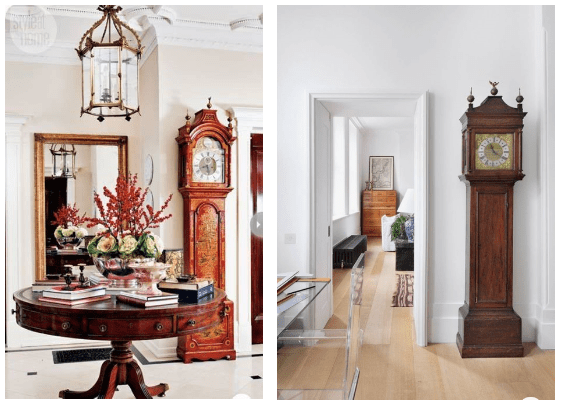
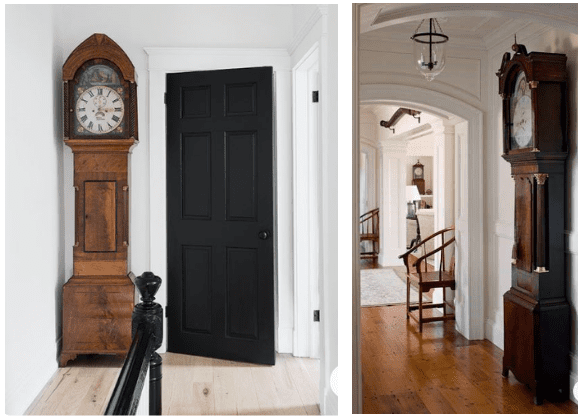
If your home does have a superfluous narrow wall, a long hallway, an awkward upstairs landing or an odd niche, the eye-catching elegance of a Grandfather clock will transform these spaces into show-stopping moments. 

Antique Grandfather clocks are the perfect wow factor for narrow walls and odd spaces

Antique Grandfather clocks may well be big-ticket items, but they definitely deliver a big wow factor. In fact, their stately and decorative contrast is all you need in a modern minimalist space. They can easily stand alone; transforming and creating all the aesthetic ‘accessorising’ you need. As hero pieces, Longcase clocks are always worth the investment.

The perfect match for any decor style

Ever popular in the 18th century as a symbol of wealth and societal status, Grandfather clocks haven’t lost their character and charm. Interior designers love them as pieces that create one-of-a-kind drama. And what makes them even more versatile is the fact that, despite their past narrative and historical backstory, they are able to transcend the years and match any decor style. 

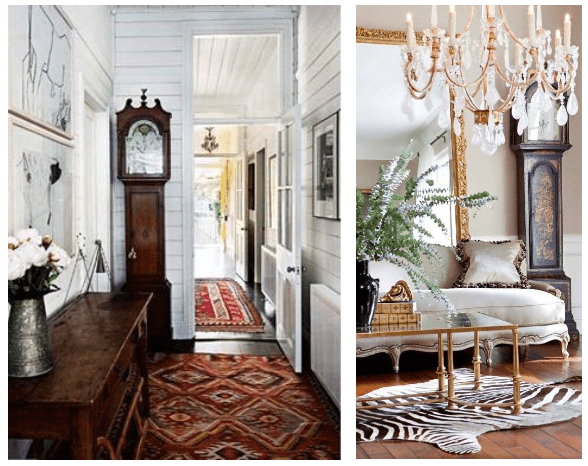
Their scale and range of wood tones and finishes – mahogany, oak, ebony, or gilded – are as beautiful in a rustic contemporary farmhouse as they are in a lavish and sumptuous French-inspired, Afro-chic parlour. From traditional to eclectic, there is a Grandfather clock to tie any decor scheme together.  

Mix and match grandfather clocks with any modern decor style

Once you’ve considered the basic mix-and-match principles of incorporating these antiques into modern homes, there really are no set rules to constrain you. As they either become the focal point or the finishing touch, the bold addition of a Grandfather or Longcase clock will always impress. 

The perfect time to add a Grandfather clock to your home

If you haven’t yet popped into the Crown Collection Store – either online or at our Bryanston Emporium – you are in for a very special surprise. With a curated collection of over 5000 antiques, our beautiful selection of handpicked antique Grandfather clocks will have you swooning. 

Take a little time to visit us and be wowed by the experience of shopping for a Grandfather clock or any other antique collectables from one of our collections.


Why French Aubusson rugs fit in any room

Categories: Articles, Blog, Style|Tags: , , , |

The sophistication, exquisite decorative appeal and artisanal craftsmanship of an antique French Aubusson rug make it a staple on the list of any interior designer or tasteful homeowner. Whether you’ve chosen a traditional, contemporary or modern aesthetic, the elegance of a French Aubusson carpet weaves together a story of harmony and history as well as adding authenticity to any space – be it an entrance hall, kitchen, lounge, bedroom, bathroom or study (and every passage in between).

The best in antique rugs (woven from wool) date back to the 16th century when weavers began to create carpets and tapestries for the royal courts and aristocrats of France. 

At The Crown Collection, we’ve been sourcing antique French Aubusson rugs since our inception.

Here are our 4 reasons why these antique ‘works of art’ are a solid investment for your home:

#1 Their timelessness

Antique rugs are way more than functional floor coverings. These pieces of ‘floor art’ have not only stood the test of time as a result of their quality materials but also because of the skilled handiwork and artistry of their makers. Using traditional techniques – steeped in French Renaissance culture – antique French Aubusson rugs have evolved to become durable, character-filled pieces that will be passed down for generations to come.

Often designed with classic motifs, patterns and colours, the unique beauty and craftsmanship of antique carpets transcend interior design fads and generational trends; adapting to function in contemporary, eclectic and classical spaces.

Antique French Aubusson rugs for modern spaces

Woven from eco-friendly raw materials (such as wool) that are kind to the environment, and produced by hand (not by machines in an energy-sapping factory filled with mass-produced items), antique French Aubusson carpets get the nod of approval from environmentalists and ordinary citizens hoping to make less of a dent on the planet. These slow-fashion items last for centuries (instead of piling up in landfills, like their mass-produced counterparts), making them an even more worthwhile investment.

#2 Their practicality

When selecting furniture and accessories for your home, the antique rug fits the functionality and aesthetic brief. 

With most fashioned from wool, antique French Aubusson carpets are soft, durable, easy to wash (just steer clear of harsh chemicals) and resistant to many stains that would otherwise require a deep clean if the carpets were produced using synthetic materials.

The practicality of French Aubusson Rugs

A further advantage of wool is its natural origins, characterising it as a non-allergenic, bacteria-deterring fibre that even resists dust mites. The rich colours and patterns also conceal spills and marks, making them suitable for any room – be it a high-traffic area or a more ornamental space.

Over time, rugs like this bespoke hand-knotted French Aubusson rug develop a beautiful patina and flaccidity, adding to their character and appeal.

#3 Their versatility

Available in various colours, styles and shapes, antique French Aubusson carpets can be adapted to suit any space – transforming its ambience to one of balance, cosiness and charm.

Not only are they able to adjust to various settings and styles (whether old or new) but these rugs are also multi-functional. A French Aubusson-style 20th-century carpet can effortlessly brighten up an otherwise dull and neutral modern living room while simultaneously anchoring furniture.

These carpets also work to revitalise and refresh conventionally utilitarian spaces like kitchens and bathrooms. Using a long or rectangular antique rug in the bathroom, brings visual interest, texture and a sense of order to the space. Conversely, in the kitchen, a tasteful carpet can add a touch of personality, warmth and colour, making it more connected and inviting.

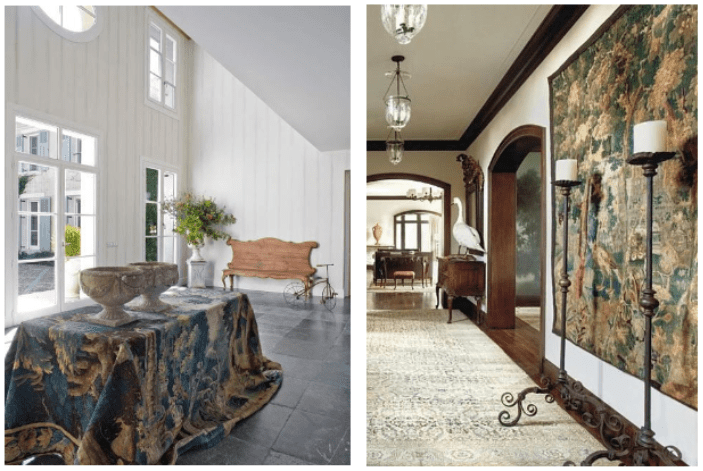
The versatility of French Aubusson rugs for walls and floors

Once you’ve made the decision to invest in an antique French Aubusson carpet, select one that complements the furniture in the room. A more heavily-patterned rug pairs well with neutral or solid colour furnishings, while a more subdued carpet will suit a space with more boldly-patterned or bright upholstery.

#4 Their beauty

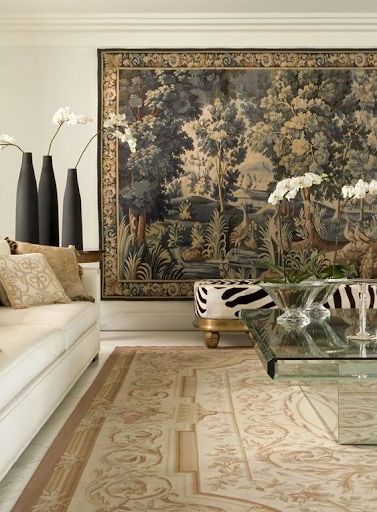
Antique rugs have the sought-after and rare ability to age gracefully. Their decorative appeal, as well as their practical longevity and quality materials, are the reason these rugs have lasted centuries. Placed on the floor (or hung as wall art) an antique rug’s bespoke beauty brings style and sophistication to modern and traditional homes alike.

The beauty of antique French Aubusson rugs on contemporary homes

The attention to detail, intricate patterns, rich textures and vibrant colours of a carefully-selected antique carpet have the decor potential to up the ante in any space in your home. 

Find an antique French Aubusson rug to suit your taste at The Crown Collection

The Crown Collection offers a curated range of antique French Aubusson carpets in various colours and designs with each one telling its own story and suiting a wide array of period and modern homes.

With centuries of culture, history, character and beauty woven into each rug, you can be sure to find the style and decorative narrative to suit your personal design aesthetic. 
Browse our carpet collection online or visit our store at 20 Ballyclare Drive, Bryanston today.


Signature antique styles that deserve a decor moment in your home

Categories: Articles, Blog, Style|Tags: , , |

There are times when you walk into a room and something elusive makes you pause. At first glance, you are not quite sure what it is – an architectural element, the light, the layout? But as the visual beauty of the space introduces itself in individual parts, your eye lands on an antique piece and you have a decor ‘aha’ moment. A sense of authenticity prevails which just makes sense and beckons you to stay. 

It is this timeless blend of the past and the present finding a natural rhythm that becomes the secret to contemporary aesthetics gaining substance from time-worn pieces. 

And it is not necessarily down to one or two antique styles that take all the glory; each period of antique history makes its own special statement. Remove that chosen piece and the room would be found lacking. 

Adding antiques from historical periods to modern spaces

Embracing unique furniture pieces or accessories from different antique styles takes its design cue from acknowledging the artisanal beauty, respecting the decorative skills and honouring the craftsmanship of furniture that is rooted in a different time but still belongs in modern-day homes. 

You don’t need to be well-versed in the historical context (or timeline) of the many antique styles that date back centuries; you just have to appreciate the magic, story and versatility that these well-preserved and sustainable pieces will bring to your spaces. 

Here at The Crown collection store, we have an enticing curated collection of hand-picked furniture and accessories from various antique styles that are ready and waiting to be included in your home.

Queen Anne style – a touch of grace

Taking us back to the early 18th century (1720 -1750), the antique style that epitomises Queen Anne’s reign showcases graceful, curved lines and decorative elements. 

The femininity of cabriole legs, shell motifs and scalloped edges, as well as the delicate proportions of Walnut and Cherry pieces (with a touch of gilding), create a beautiful contrast to minimalistic and monochromatic contemporary design schemes. 

Queen Anne antique style furniture

Up the ante in any room with a Queen Anne-style piece from our collection:

  • A gilded and upholstered Queen Anne-style sofa 
  • A Queen Anne Walnut chest on stand
  • An 18th-century Cape Stinkwood Traditional Tulbagh/Queen Anne Style Rusbank
  • A silver-plated Queen Anne teapot on a stand

Georgian style – a touch of classical symmetry

Roughly spanning 110 years (1714 – 1827), Georgian furniture – with its straight lines and restrained ornamentation – becomes a perfect pairing with modern design. The rich warmth of Mahogany and Walnut – often with brass fittings or inlays – makes Georgian pieces an elegant solution to transform your home.  

Georgian style antiques for modern spaces

Take your pick from the following Georgian antique-style pieces from our collection:

  • A Georgian Walnut chest-on-chest on bracket feet
  • A Georgian Flame Mahogany bow-fronted chest of drawers with brass handles
  • A Georgian mahogany mirror
  • A Pair of Georgian-style chairs 

Regency style – a touch of the ornate

Known for their elegance and simplicity, furniture pieces from this antique style (1811 -1830) not only feature classical clean lines but also play with curved shapes and exotic materials such as Rosewood, Ebony and Mahogany with brass inlays or ormolu decoration. 

Regency-style antiques for contemporary homes

Our collection of Regency antique-style pieces includes:

  • A selection of round Regency convex, concave and bevelled mirrors
  • A Regency Rosewood inlaid and folding card table (circa 1800) with the BADA stamp (British Antique Dealers Association) and brass beading on brass castors
  • A Regency carved bleached/natural Mahogany settee on castors
  • A pair of teak Regency-style leather chairs
  • A late Regency inlaid mahogany and Rosewood pedestal sideboard, fitted with original oval foliate brass escutcheons and loop handles and with a cellarette drawer
  • A Regency Mahogany secretaire/bookcase (circa 1820) with glazed cottage pane doors

Victorian style – a touch of opulence

From 1837-1901, Queen Victoria’s reign and personality had a significant influence on furniture and accessory design. Of all antique decor styles, Victorian pieces feature intricate carvings, ornate details, rich colours and plush upholstery fabrics. Mahogany, Walnut and Teak furniture items from this period will always create an opulent cosiness in your modern home. 

Victorian antiques on modern spaces

From your dining room and kitchen to your bedroom or bathroom, our collection of Victorian-style pieces is just the inspiration you need to transform a space:

  • A Victorian Oak campaign military chest In two parts with brass escutcheons and gilt-tooled leather writing surface (circa 1890)
  • A Victorian English carved and bleached Oak armoire with bevelled mirror doors and two drawers
  • A pair of Victorian carved chairs with rattan seats
  • A 4-6 seater Victorian Oak square table with Castors
  • A Victorian Walnut, Mahogany and Burr-walnut pier cabinet with lock and key (circa 1905 ) 

Art Nouveau and Art Deco styles – touches of romance and glamour

Popular between 1890 and 1910 in Europe and the US, it is the flowing lines and organic shapes that define Art Nouveau furniture and accessories; merging nature, design and craftsmanship. Collectables from this style highlight curved lines and floral or plant motifs, and lighter woods such as Oak or Maple. 

Items such as a pair of Art Nouveau Candelabras or an Art Nouveau gilt clock will certainly create a sense of romance and become conversation pieces. 

Art Nouveau & Art Deco antiques

Glamorous and luxurious, Art Deco pieces – spanning the 1920s and 1930s – rebelled against their predecessor and are known for their sleek, geometric forms and bold colours. Furniture pieces from this period often showcase shiny metallic finishes (such as chrome and glass) and exotic woods such as Rosewood or Macassar Ebony. 

Add glamour to your guest room with a pair of Art Deco Walnut single beds, zhoosh up your drinks cabinet with an 8-piece Czech Art Deco Crystal Cocktail Set or entertain like the queen with a 4-piece silver-plated Art Deco tea service

The Crown Collection is your obvious go-to antique store to indulge your love of all antique styles. This is where the sympathetic inclusion and eclectic layering of antique styles from different historical periods into modern spaces create personalised decor moments. 

Confidently blending the past with the present is what will make your home a welcoming place that will beautifully tell your bespoke story and offer all those who cross your threshold a moment of pause.    

3 Modern decor styles that need antiques

Categories: Articles, Blog, Style|Tags: , , , , , , , , , |

Creating a home that reflects your personality and lifestyle is comprised of varying design expressions and decor options. It often comes down to a careful balance of form and function, and mixing the old with the new. Antiques are a popular, sustainable and timeless choice – as well as a versatile solution – to getting this right across many design aesthetics. 

Three decor styles that benefit beautifully from the addition of antiques are modern minimalism, modern maximalism and modern Afro-Chic. Each style has its own nuances and characteristics, but they all gain a boost of personality with the addition of well-chosen pieces of antique furniture. 

Antiques and modern minimalism – ‘Less is more’

Minimalism, as a philosophy, involves stripping things down or editing things back to their most basic form. As an interior design aesthetic, it emphasises simplicity, clean lines, a neutral palette and uncluttered spaces. 

A minimalist approach highlights essential elements such as light, form and beautiful materials to create a free sense of flow and calm. There are no extras and the few details that are used blend harmoniously into the overall setting.

Antiques in a modern minimalist space

Because the focus is on removing distractions, furniture and accessories are carefully curated and kept to a minimum. Antiques play a crucial role in a minimalistic space by adding texture, depth and interest to an otherwise monochromatic and ‘sterile’ room. 

A sense of history and authenticity is often missing in a modern minimalist design and well-chosen antique furniture piecessuch as an armoire – become a purposeful focal point and conversation piece. The calm is not interrupted, but a sense of elegance is introduced into a neutral palette. 

The secret is choosing an antique piece of furniture that will complement your minimalistic style story rather than detract from it.

Antiques and modern maximalism – ‘More is more’

Sophie Robinson – iconic British interior design and colour expert – is the queen of the maximalist aesthetic. One glance at her bold approach to colour and pattern leaves you energised and in awe of how her busy ‘mix-and-not-match’ philosophy just works; making even the die-hard minimalist smile and start dreaming about introducing colour or pattern into their spaces. 

This is a heartfelt design style, and you must prioritise fabulousness over practicality at every opportunity.”  -Sophie Robinson. Her tips for getting the look right include using a tight colour palette to create pattern harmony and repeating similar colours, patterns and design styles for overall cohesion. 

As a style, a maximalist aesthetic celebrates excess patterns, plenty of accessories and highly saturated colours; creating spaces that are extravagant and playful.

And this is where antiques quickly become the ideal solution as a much-needed contrast; allowing your eye to rest as it takes in the seemingly chaotic busyness of a maximalist-designed room. 

Modern maximalism and antique furniture

Well-placed antique pieces also anchor a maximalist space by providing a sense of structure and balance.

  • A large antique mirror will cleverly and beautifully reflect the vibrant patterns and colours of the room’s decor
  • An antique chandelier will create a striking and definitive focal point. 
  • An antique rug will ‘ground’ a seating area or bed and blend with all the other playful patterns and colours
  • An antique dresser will certainly be an arresting statement piece if painted in a bright colour.

Embracing a maximalist aesthetic is all about creative expression and how that informs your interpretation of fantasy and imagination in a space.   

Antiques and modern Afro-chic – ‘A more eclectic vibe’

From the Cape to Cairo, Africa has always inspired artists and design trends. Although Afro-Chic is a hard design aesthetic to definitively pin down, at its core, it draws inspiration from our rich and diverse African culture and heritage. 

It’s an eclectic melting pot of rustic elements, bold geometric patterns, animal prints, natural fibres, organic shapes, handwoven fabrics and traditional artworks.

Antique furniture in a modern Afro Chic space

The Afro-Chic colour palette is a visual inspiration from nature and is both subdued and edgy. Earthy tones (terracotta, ochre, orange and off-white) are the moody backdrop to vibrant green and sky blue accents as well as pink, magenta and purple hues of an African sunset which add an animated sense of joy. 

The craftsmanship of antiques, the natural wood finishes and the artisanal detailing all harmonise with an Afro–Chic narrative; cleverly creating a sense of continuity to tie the eclectic ‘mismatched’ elements together.  

  • An antique wood carving from West Africa can be repurposed as a mantle piece. 
  • An antique beaded stool from East Africa can be used as a side table.
  • A rustic antique bench in front of a fireplace becomes a gathering place. 
  • An antique riempie bench is a versatile addition to any room in the house. 

Be it the clean lines of modern minimalism, the colourful boldness of modern maximalism or the eclectic vibe of modern Afro-Chic, antiques become a way to create a unique and timeless living aesthetic.

The Crown Collection – A ‘modern’ antique store 

Assisting you in incorporating antiques in modern spaces – no matter your style – is what The Crown Collection Store does best. Not only will you find what you are looking for from more than 5 000 handpicked items, but any piece you purchase is an investment and likely to increase in value over time

Whatever your modern decor preference, an antique piece is an obvious choice to elevate, balance or add contrast to your home. 

Shop online or browse our curated collection in-store at 20 Ballyclare Drive, Bryanston.


5 Principles for mixing antiques with modern pieces

Categories: Articles, Blog, Style|Tags: , , |

The love for artisanal beauty and the timeless, sustainable characteristics of antiques have influenced decor trends for decades. And current trends in design only reinforce this with homeowners – of all ages – wanting to include the richness and value of antique pieces into their modern aesthetics. According to Pinterest, “Boomers and Gen Z will find new ways to honour old stuff in their homes, combining vintage and inherited pieces with modern styles.” Simply put, antiques never go out of fashion. 

Contemporary sleek, minimalist spaces gain immediate personality with the addition of antiques which, instead of taking away from the modernity of the overall interior scheme, actually create a harmonious balance.  

“When we want furniture for our homes, we usually think of buying new items, but there are so many reasons why antiques and vintage pieces are a better buy. Antique and vintage furniture cost much the same as new furniture and increase in value, unlike new furniture. Not only are antiques a great investment, but they also have history, are beautiful and they never date.” -Jacqui Moskovitz, Director of Marketing, Operations & Procurement at The Crown Collection.

Mix and match antiques with modern pieces

Antiques instantly add character, interest and story to a modern home. But if you don’t know how to mix the old with the new, you may end up with an interior that looks unbalanced, mismatched, or incongruous. 

(We recently highlighted Stephen Falcke’s home which is a striking case study of combining antiques in a modern home). 

You don’t need to be an expert collector to seamlessly integrate antique furniture or accessories into your home. You simply need a little knowledge of the basic principles and then you will have the tools to successfully mix and match antiques into any contemporary space. 

#1 Scale, balance & proportion

Modern homes are often open-plan and generally subscribe to a light, neutral and airy feel that may be cold, bland and lacking ‘something.’ This is where the substantial gravitas of antique pieces immediately add interest and warmth and are elevated to the status of a ‘statement piece’ or ‘conversation piece.’ It just takes one carefully selected piece to completely transform a room and break up a generic and overly coordinated contemporary look. 

To avoid a room looking ‘shabby,’ it makes sense to spread the patina of antiques throughout the space so that the curation of old and new feels fresh, balanced and intentional.

Scale and balance - antiques and contemporary furniture

The scale and placement of furniture are just as important when decorating a room. Darker, heavier and larger antique furniturearmoires, bombe chests, linen presses, secretaires and chests of drawers – were originally designed for a unique context and should be placed against a wall. Antique dining tables, on the other hand, are the perfect juxtaposition to new contemporary chairs and will never overwhelm a modern minimalist aesthetic. 

#2 Form, function & repurposing

Antique furniture prides itself on its beauty and versatility. In their day, they were manufactured for specific functional purposes but also showcased master craftsmanship. Over the centuries, many antique pieces have evolved from their original use and are being repurposed in modern homes today. This added sustainability adds to their intrinsic investment value.

Versatility of antiques in modern spaces

The wood carvings, curves, marquetry and decorative flourishes of antiques all perfectly complement the straight lines of modern design. (An antique armoire becomes the perfect storage signature piece for books and objets d’art or as a drinks cabinet). 

#3 Gilded, stained or bleached

Unless it is a rare collectable, antiques do not have to be displayed in their original state; they can be refinished. Your personal preferences may include gilding, staining, bleaching, painting, or upholstering – depending on the piece of furniture and your design aesthetic. 

This is also where your personality comes into play and where you get to give a piece of furniture a new lease of life; ending up with a really special and unique statement or accent piece. 

Gilded bleached and stained antiques in modern homes

For customised finishes – including French polishing, hand gilding, paint techniques, bleaching or staining (darker or lighter) – our professional in-house restorers are available to transform any piece that takes your fancy from our store.  

#4 Colour, texture and neutrals

The biggest challenge with mixing antiques with modern pieces is avoiding visual noise when it comes to the art of marrying different styles in one space. You do not want a  room’s design to jar; its decor story needs to make sense. Even if you have a quirky or eclectic design bent, there still needs to be a sense of harmony and cohesion. 

  • Unite different pieces and styles with the same colour palette – this could be wood tones, metals, an accent colour or repetitive fabrics or patterns. This is the easiest way to integrate disparate elements. 
  • Refinish a variety of antique pieces in different woods with one paint colour, stain or paint technique to create visual continuity. 
  • Balance a mix of signature pieces or furniture styles with a neutral or monochromatic background.
  • Anchor a scheme with black accents which also adds a sophisticated design element.

Antique chairs in neutrals

#5 Signature, accent & statement pieces

The quickest way to create maximum impact in a modern space is with just one carefully chosen antique piece of furniture that becomes the hero piece of the room. This is where you can go big and bold with a large-scale piece that is dramatic and commands attention – a huge gilded mirror, a grand linen press, an ornate French sofa, a decorative screen, a large antique painting or an oversized chandelier

Once the main attraction is in place, you can build the rest of the scheme around that. If you are not brave enough to commit to or invest in a standalone signature piece, then start with smaller accent pieces such as side tables, a kist, a console table or an occasional chair which can all easily be moved around your home.

Antique signature & accent pieces

Antiques and The Crown Collection 

Incorporating antiques into modern spaces has never been more accessible than a visit to the Crown Collection

For further inspiration on how to include antiques into any design aesthetic, visit our blog page, or simply start shopping our curated collection and eclectic combination of decorative antiques and modern and classic styles. 


Getting the mix-and-match of antiques in modern spaces ‘just right’

Categories: Articles, Blog, Style|Tags: |

A warm and welcoming interior seldom attributes its success to just one thing. Sometimes it takes years to achieve the look, but it always comes down to the intentional curation of many pieces – modern and antique – that naturally work together and look ‘just right.’ We recently focused on the home of Interior designer, Stephen Falcke which is an ‘object lesson’ in achieving balance, harmony and ‘just the right’ amount of quirkiness required when pairing modern and antique furniture. 

You don’t, however, need an interior design background to put together a scheme that is layered, sustainable and that tells a customised story. Although there are functional design rules that will always guide a winning mix-and-match aesthetic scale proportion, focal point, balance, lighting, cohesiveness etc – there is always a personalised bespoke element that plays a role when boldly marrying contemporary features and antiques. 

Go over to the dark side

Although antiques come in all shades and hues, the classic darker wood tones somehow have got a bad rap in contemporary circles. But these darker wood antiques are currently seeing a resurgence and coming into their own in modern spaces. 

Mix and match dark wood antiques in light modern spaces

The old-world charm of darker patinas gives life to a light, minimalist contemporary room. If ‘less is more’ is your decor mantra, then a dark antique piece of furniture is the perfect focal point or hero piece against an otherwise ‘neutral’ backdrop. Teak, imbuia and mahogany pieces are the ideal go-to options in a white scheme. It just takes one of these statement pieces to transform a room. This could be an armoire, a daybed, a console table or a chest of drawers

The richness and warmth of natural materials offer a durable and long-lasting design for contemporary homes. 

Be confident to play with antiques

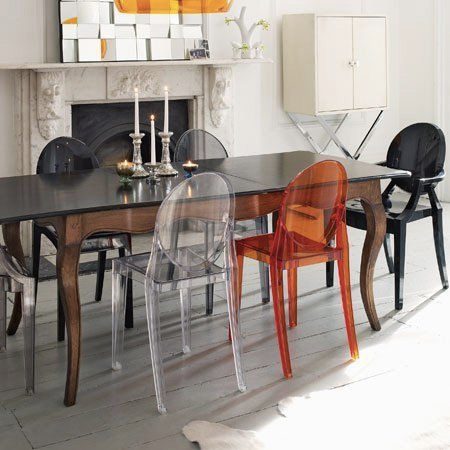
Mixing and matching modern and antique furniture is all about playing with different wood tones and styles. The contrast of contemporary ghost chairs with an antique dining room table, or a zebra-print rug under an antique coffee table effortlessly up the Afro-chic ante. 

“Our homes are our sanctuaries where we have more control over the events and energy that occur within them, so it is important to think about the materials that we use to construct them.’” -Joshua Smith, Interior Designer specializing in spiritual design. 

The fun & eclectic aesthetic of antiques in modern spaces

The success of creating a sense of cohesiveness when mixing different woods or eclectic contemporary pieces with traditional antiques relies on the principle of repetition. Make sure you balance wood tones around the room and avoid ‘clustering’ all of the wood tones in just one area of the space. 

Adding a fun colourful rug, a large piece of modern art (or gallery wall) or bright upholstery fabric to a chair will bring everything modern and antique together in a celebration of design quirkiness and harmony.

Add a bit of antique sparkle

When in doubt as to what to introduce as a mix-and-match starting point to give a room a ‘face-lift,’ you can never go wrong with shiny and reflective items. In other words, an antique mirror, a crystal chandelier or a gilded item (or two) are the ultimate in making a statement and creating a sense of individuality and layering. 

Add antique chandeliers and mirrors to modern spaces

The versatility, visual interest and potential of strategically-placed mirrors are broad; complementing art, lighting and any other ornamental elements. And as a decorative element, antique mirrors are a functional and stylish accessory that will never let a room down.

Chandeliers or lanterns quickly transform a room’s aesthetic and redefine the gentle & elegant play of light in a space. They have been, and always will be, a timeless decorative element in traditional and modern rooms. 

These antique additions pave the way for contemporary sculptural pieces, edgy art and modern furniture. 

Mix and match antiques to your heart’s content at The Crown Collection

A modern aesthetic is crying out for layered interest, bespoke personality and a visual story, and inspiration doesn’t come easier than popping into The Crown Collection; South Africa’s largest emporium of hand-picked antique, French and genuine vintage items that will add just the right design flair to each and every space in your home. 

Shop online or visit us in-store at 20 Ballyclare Drive, Bryanston.


Stephen Falcke’s modern approach to decorating with antiques

Categories: Articles, Blog, Style|Tags: , , , |

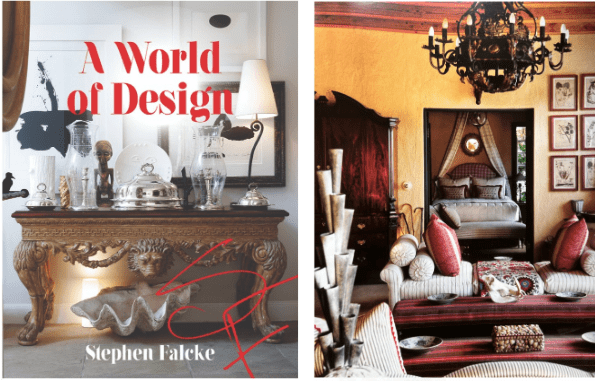
Stephen Falcke – interior designer extraordinaire – is often referred to as a ‘design luminary;’ an appropriate description of this iconic South African decorator who has left his mark on homes, hotels and apartments around the world. An award-winning designer and patron of Decorex Joburg, Stephen is also the author of ‘A World of Design’ which chronicles 25 years of his career and showcases a curated collection of 40 spaces that he has magically transformed. 

His unique insights on trends, interiors and the use of antiques are worth noting. And from a Bohemian palette to a minimalist Afro-chic aesthetic, there is one constant that stands out in the way Stephen Falcke approaches all his clients’ briefs: Never underestimate the value of just one piece of quality furniture in a room.

A World of Design by Stephen Falcke

But it is his own Cape Georgian home – aptly named ‘Dream House’ – that has charmed and inspired us and where his approach to antiques and design gives one pause and makes one smile. His personal philosophy is succinctly articulated in just 6 words: “The ultimate in luxury is comfort.” 

Stephen also believes that a room should never overpower the personality or character of those living in them, which is clearly the secret to a beautifully presented home.

Let’s break down a few design moments in his home that encapsulate the relationship between architecture, furniture design, fabrics and space, and are guiding principles for any home decorator. 

#1 Mix old and new

Stephen Falcke is the expert when it comes to incorporating antiques in modern spaces, creating an ‘electric combination’ and the perfect balance of things that just work together. He will be quick to mention his love for symmetry and proportion, but it is his attention to detail in selecting artworks, antique pieces and quality contemporary furniture that make his home a space to linger. 

Wherever the eye lands is a story, a quirky moment, a bold statement or a call to breathe.  

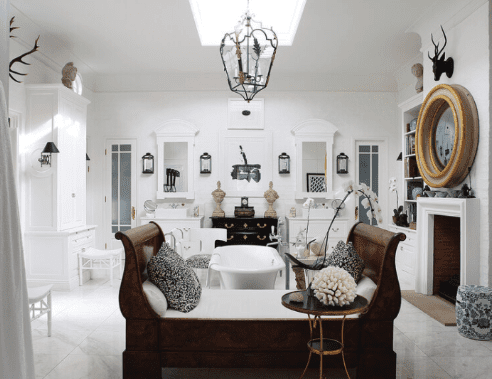
Antique daybed in Stephen Falcke's bathroom

A wander through his home will quickly show you that although he follows some rules, he breaks others and sometimes he just makes his own. An antique daybed in the bathroom? Makes absolute sense when each room in your home is a space to be lived in and enjoyed to the max. (And who doesn’t dream of a fireplace in their bathroom?). 

#2 Contrast shiny with matte

As one moves from space to space in Stephen’s home, you will quickly be struck by his love for carefully chosen objets d’art and an arrangement of artworks. He loves to showcase shiny antiques on matte surfaces and as these reflective pieces play with the light, something very special happens. 

Contrasting matte surfaces with items that have a high gloss finish (antique silverware,  brass objects, glassware, silver trays, lanterns or chandeliers) immediately adds a modern feel to any space. 

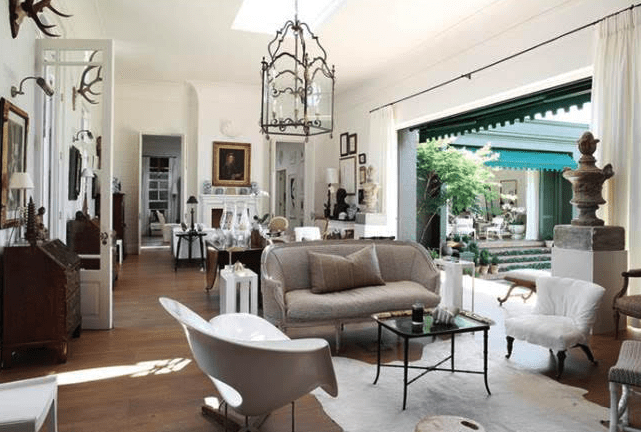
Stephen Falcke mixing modern and antique items

#3 Juxtapose big with small

Proportion and scale are foundational interior decorating principles, but Stephen plays with this by often juxtaposing something really large with something small. This balancing of opposites in a room creates dynamic tension and striking interest. 

By combining different sizes and proportions of objects to make a beautiful exhibit, your home starts to reflect your own style.

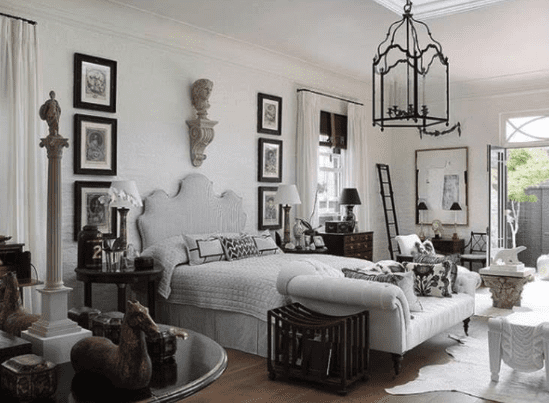
Stephen also has a particular love for antique lanterns which although large, cleverly offer ‘negative’ space and immediately become a functional focal point.  

Antiques in Stephen Falcke bedroom

#4 Balance pattern, texture & detail

When it comes to layering pattern and detail, Stephen Falcke is a master decor artist. His practised eye, years of experience and natural talent are a gift to the world of interior design. His ‘Dream House,’ which employs a monochromatic scheme, boasts this ‘effortless’ interplay of pattern, detail and texture to create a rich and layered narrative that is luxurious, sophisticated, comfortable and sumptuous. 

Mixing patterns and details takes some skill, but each space in your home is a backdrop to your personality. From minimalist to maximalist, interior design always has a personal subtext. 

And so if you love it – embrace, celebrate it and decorate with it. 

If you are still not sure where to start, indulge your senses and immerse yourself in Stephen Falcke’s book (available from our store for R1800). You will come away enchanted, inspired and ready to purchase an antique coffee table or console table on which to display the book. 

You can even go a step further and buy one of the exact French chandeliers that Stephen has in his home, right here at The Crown Collection.  

If there is one thing you will walk away with from Stephen Falcke’s home, it is the intense desire to shop that one antique item to magically transform your space. With over 5000 items and new stock arriving weekly, you are most likely to find it at The Crown Collection. 

Browse all our handpicked antique collections or pop in at our studio at 20 Ballyclare Drive, Bryanston. 


Dining in style with antique refectory tables

Categories: Articles, Blog, Style|Tags: , , |

If you have the space, an antique refectory table is the ideal piece of furniture to host a vibrant family gathering, cordial meeting with the neighbours or celebratory banquet with friends. Whether placed in a dining room, foyer, outdoor patio, kitchen or open-plan home, the timeless elegance of a refectory table marries a historic sense of grandeur with the practical value of dining around a table with a larger group of guests. 


Originating in monasteries during mediaeval times, these rustic elongated tables were later welcomed as luxurious banqueting tables in castles, abbeys and noble residences during the middle ages. Large groups of monks ate around refectory tables in the dining room (otherwise known as a refectory) and years later the tables were adapted to convene students at academic institutions because of their capacity to seat large numbers.

These solid tables – originally built of oak or walnut and crafted using stretchers placed close to the floor to support the structure – are the ultimate focal point for a room. And the enduring quality of refectory tables not only makes them a must-have statement piece, but also a worthwhile investment piece for a traditional or contemporary aesthetic.

At The Crown Collection, we have outlined 3 styling tips to make the most of these tables in any space:

#1 Mix and match the table and chairs

The principle that one should blend ‘something old and something new’ not only applies to the bride’s choice of clothing for her wedding day, but also pertains marrying an antique statement piece with a modern contrast.

This balanced approach to interior design creates intrigue, visual contrast and balance to any space, while still allowing the homeowner to express their unique decor personality.

When you invest in a big-ticket item such as an antique refectory table, you can easily implement this mix-and-match approach by pairing it with ghost chairs, midcentury chairs, benches or antique chairs with modern upholstery. While the table will stand the test of time and be passed down through generations, the chairs can be updated every few years to change up your decor or match seasonal design trends. 

antique refectory dining room table with ghost chairs

#2 Contrast the table with the floor

A design no-no is matching the dining table colour to the floor. For the antique refectory table to be the hero, rather choose to complement it with a bold antique rug that echoes an old-world charm or a modern contrasting tiled or screed floor. Be sure to select a flooring finish or accent rug that helps to encapsulate the room’s focal point (i.e. the refectory table).

A carpet or rug assists in demarcating various zones in an open-plan space and complements the theme of a room by tying various elements together. And when it comes to purchasing a rug, the rule of thumb is to measure the length and breadth of the table and chairs and add at least 30cm all the way around; creating a ‘frame’ around the table.

A well-chosen rug also brings a sense of grandeur and story to the dining room, patio, entrance hall or kitchen where you have chosen to place the antique refectory table.

For smaller apartments or townhouses, where there isn’t as much space to play with, you can opt to purchase a drop-leaf refectory table, which you can open out when you host large groups and reduce in size for everyday use. (These drop-leaf refectory options are, however, quite a rare find). 

mix-and-match modern and antique furniture

#3 Use it to anchor any space

A refectory table serves as an excellent focal point for any room; be it a stand-alone dining room or an open-plan space in need of a bold piece of furniture. These pieces will always be a conversation starter thanks to their size, craftsmanship and decor backstory. 

The old-world charm of an antique refectory table can also work well in a long, narrow space; the elongated shape of the table actually makes the room appear wider.

When choosing an anchoring furniture item such as a dining table, make sure that any other furniture and accessories work together as a cohesive whole rather than each piece competing for attention. 

Allow all the other decor pieces and accessories in the room (lights, wall hangings, chairs and carpets) to work towards showcasing the cherished centrepiece by placing them over or around the table in such a way that the table remains the highlighted hero of the room.  

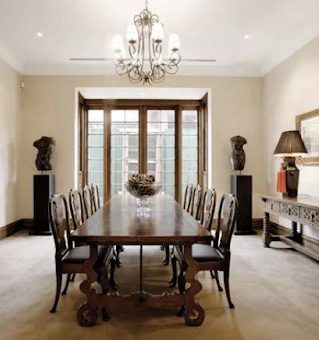
antique refectory table in stylish dining room setting

Visit The Crown Collection

Browse our wide selection of handpicked antique refectory tables (in oak, mahogany, walnut or teak) to fit in your dining room, foyer, kitchen or entrance hall.

If the finish is not exactly what you are looking for, our experienced in-house restorers will gild it, paint technique it or stain it to suit your preference.

Shop our range of dining tables online or browse our treasure trove of statement pieces in-store at 20 Ballyclare Drive, Bryanston.


Go to Top