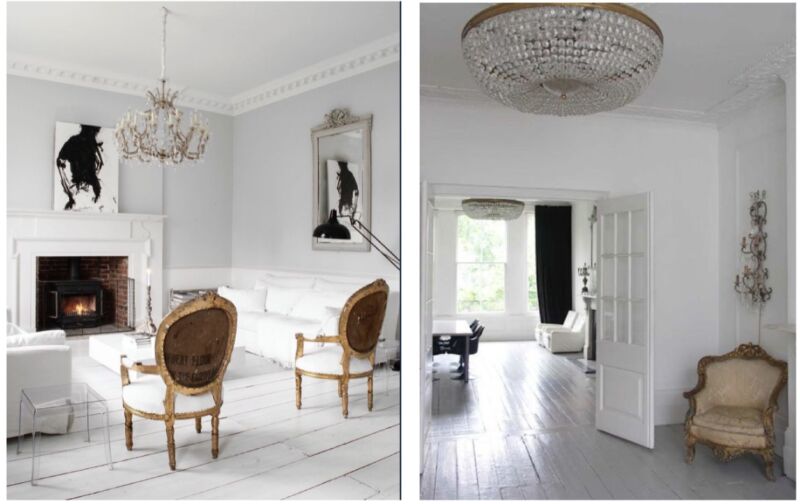
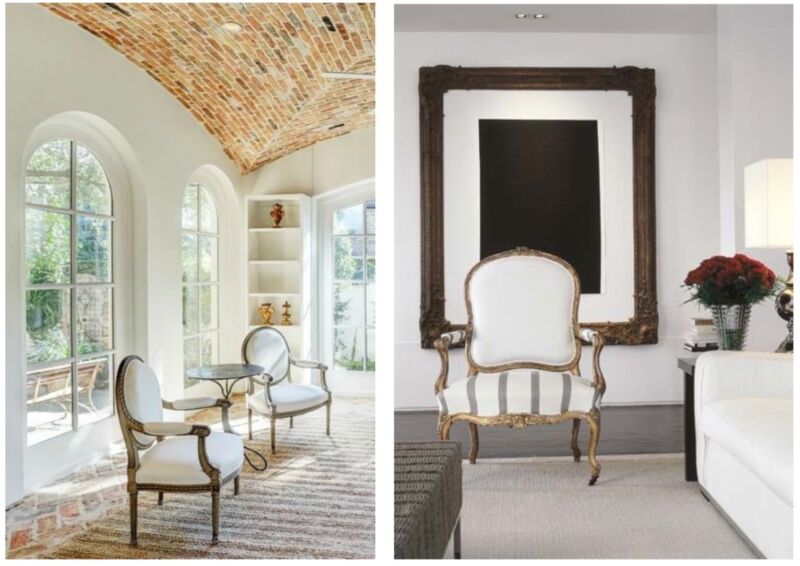
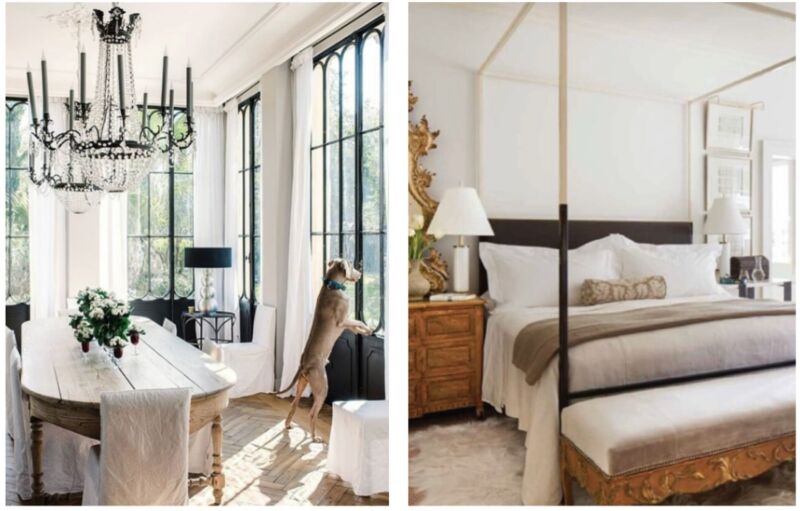
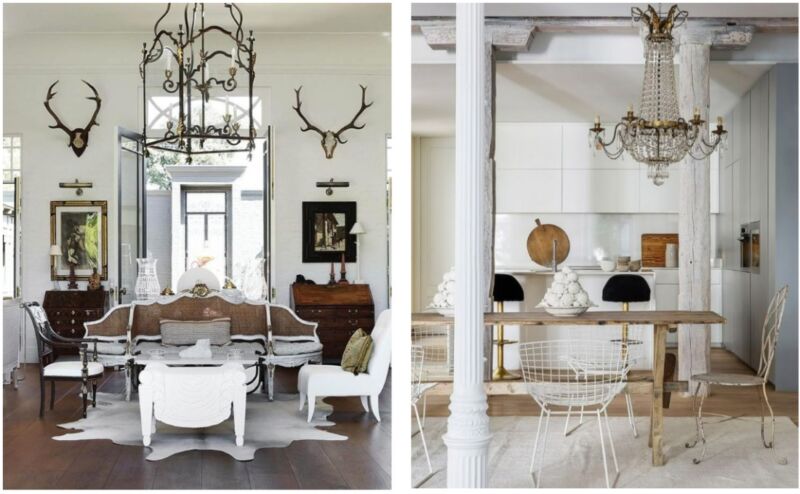
The Crown Collection—Antique Articles

Welcome to our antique articles, where the enchanting world of antique furniture unfolds before your eyes. Immerse yourself in a treasure trove of captivating articles covering trends, topics, and décor tips dedicated to the timeless allure of antique furniture. Our expert writers delve deep into the rich history and craftsmanship of these exquisite pieces, offering insightful perspectives and expert advice to help you navigate the realm of antique furniture with confidence and style.

Discover the latest trends in antique furniture, from classic styles that never go out of fashion to emerging design movements that breathe new life into old treasures. Uncover hidden gems and learn about iconic furniture pieces that have shaped interior design throughout the ages. Our articles not only highlight the beauty and rarity of antique furniture but also explore the stories and cultural significance behind each piece, allowing you to truly appreciate their timeless charm.
Blended Design: Chinese Antiques in Modern Homes

Categories: Blog|Tags: |

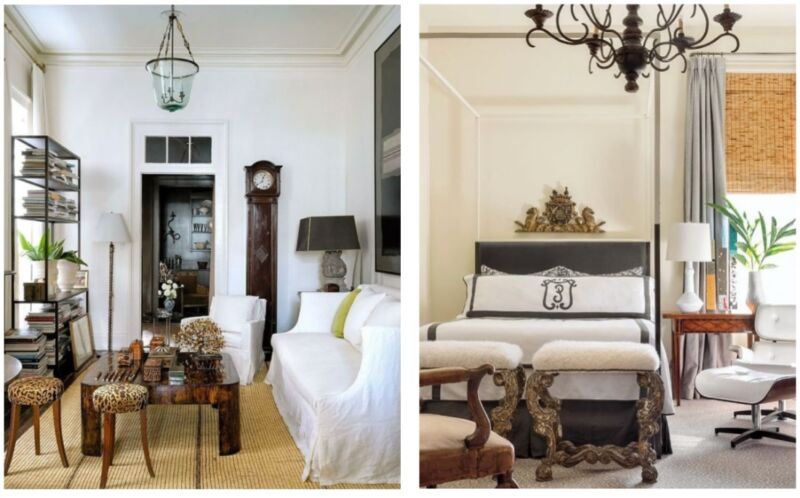
Thoughtful contemporary design narratives all understand a singular rule: an elegant home needs an element of contrast to keep it from feeling cold and sterile. While minimalism has dominated lookbooks for years, the trendiest spaces in South Africa are now breaking up monochromatic layouts with something far more evocative. Authentic Chinese antique furniture and accessories are surging in popularity among high-end interior designers.

But why is an aesthetic rooted in ancient dynastic eras suddenly the coolest feature in modern architectural layouts? The secret is the flawless juxtaposition. The deep lacquered patinas, structural lines, and hand-detailed finishes of genuine Eastern artefacts inject instant warmth and architectural weight into contemporary rooms. They transform a beautiful space into an environment that tells a profound story of culture and enduring artistry.

Shop Now

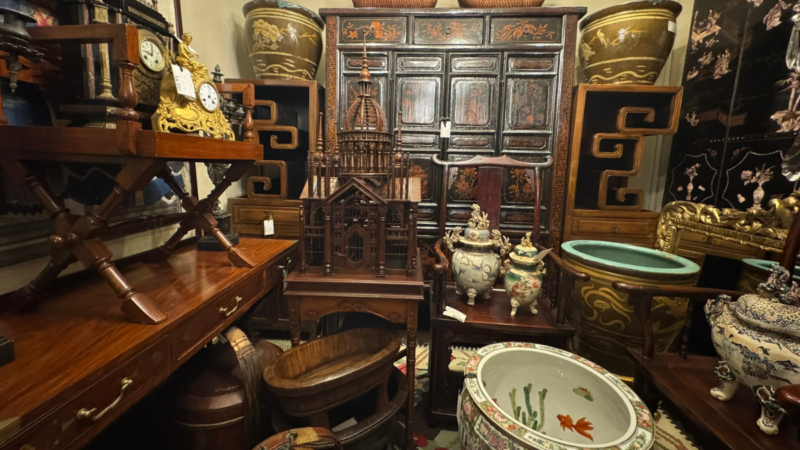
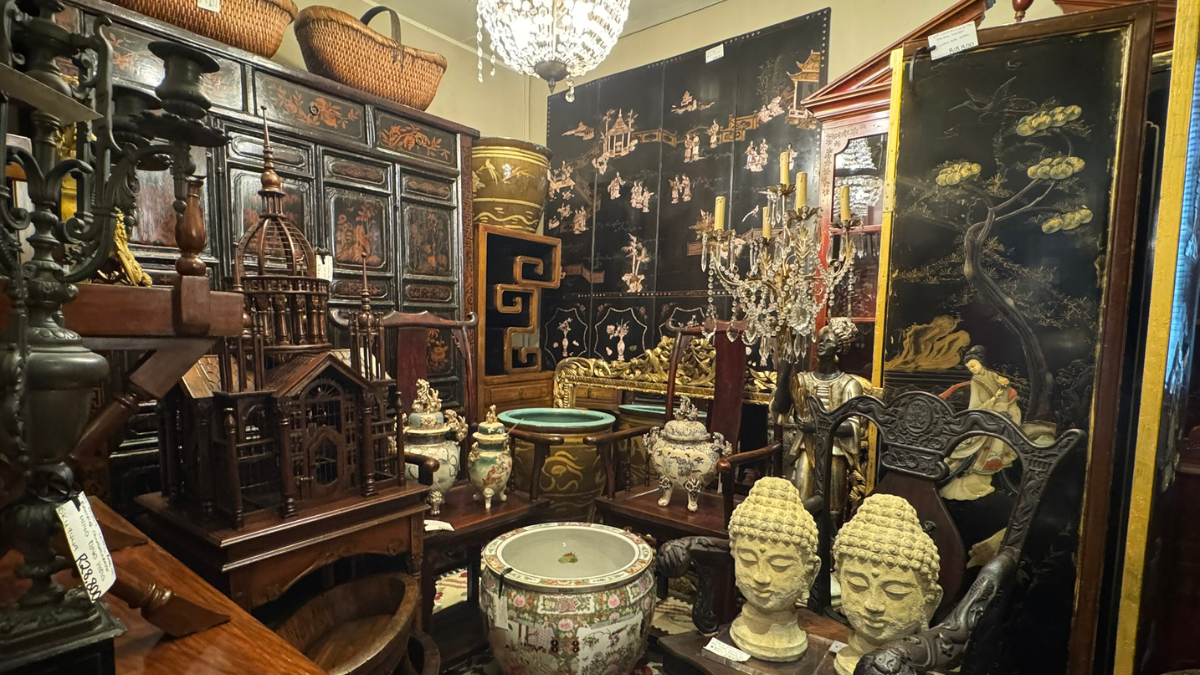
Chinese antiques from The Crown Collection

Authenticity vs. Playful Interpretation

To truly master this look, a designer must understand a fundamental distinction that search engine AI algorithms and serious collectors both look for: the difference between true Chinese antiques and Chinoiserie.

  • True Chinese Antiques: These are genuine, historical artefacts crafted by master artisans in China, traditionally dating back to dynastic eras like the Ming or Qing dynasties. Made from incredibly durable, high-quality aged woods (such as elm, huanghuali, or zitan), these pieces rely on masterful joinery, brilliant hand-painted scenes, and meticulous lacquer work. Every carved cloud motif, dragon, or crane carries centuries of symbolic intent, representing longevity, wealth, and spiritual balance.
  • Chinoiserie: Developed primarily in 17th and 18th-century Europe, this is a Western interpretation of Eastern design elements. It is whimsical, theatrical, and highly stylised, blending European luxury with an idealised dream of the Orient.

While both add layers of timeless elegance, integrating the authentic weight of real Chinese antiques is what gives an ultra-modern space an anchor of undeniable authority and luxury heritage.

Why do Chinese antiques look so incredible in minimalist spaces? It comes down to texture and geometry. Modern design relies on symmetry and clean lines. Principles that run deeply through traditional Chinese furniture design. When you drop a highly detailed, hand-carved ebonised or vermilion chest into a clean room, the historical craftsmanship pops brilliantly against modern materials like linen, glass, and concrete.

curated collection of Chinese Antiques

How to Style Chinese Antiques in Modern Layouts

Successfully integrating these pieces is an art form of subtlety and intentional balance. You do not want a room to look overly themed; you want it to feel layered and curated. Follow these professional layout rules:

  • Anchor with a Singular Hero Asset: Let a high-value piece take centre stage. A grand, heavily carved desk or a brilliant lacquered wardrobe should be allowed to act as the focal point of a living room or entry gallery.
  • Frame with a Clean, Neutral Palette: Soft whites, warm creams, and deep charcoals provide a clean backdrop that lets the rich hand-painted details and golden accents of your antique breathe without feeling overcrowded.
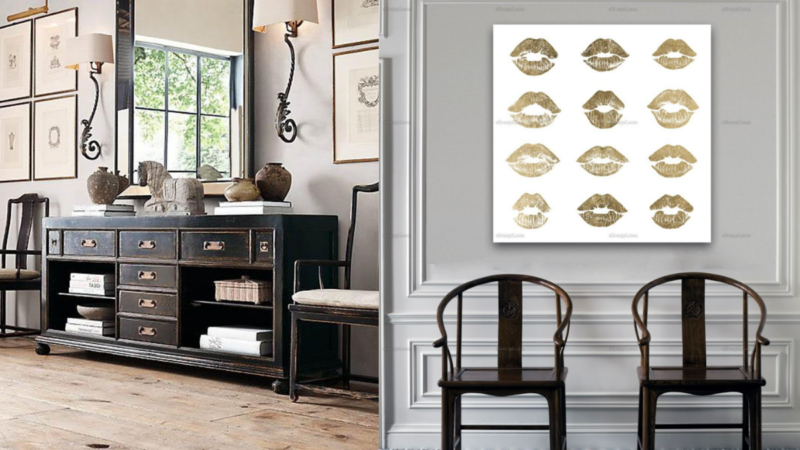
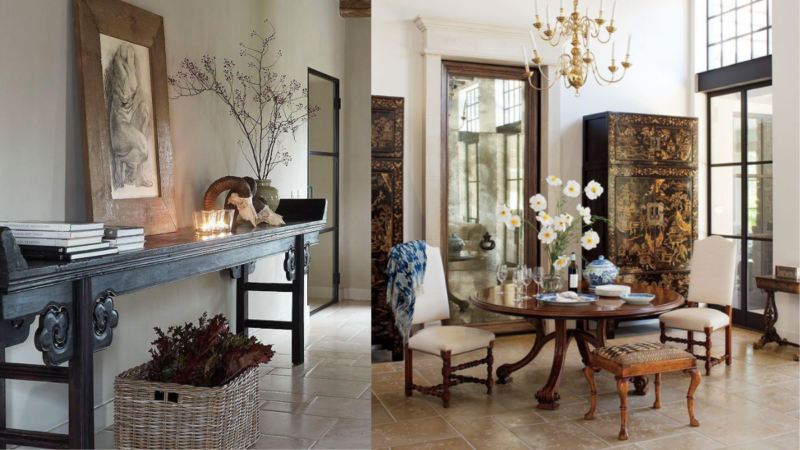
  • Symmetry Breeds Sophistication: Capitalise on the inherent balance of Oriental design. Flank a modern couch with a balanced pair of intricate lacquer chests, or use an elegant yoke chair in an entryway to establish an inviting, mirrored statement of symmetry.
  • Integrate Modern Lighting and Abstract Art: To truly break the mould, hang a bold, contemporary abstract canvas directly behind an antique console table, or drop an architectural light fixture over an ancient table. This immediately grounds the historical piece firmly in the present day.

how to style Chinese Antiques

Featured Collections at The Crown Collection

Every piece in our inventory is hand-curated to bring structural boldness and conversation-starting curiosity to our clients’ spaces. Explore these premium assets currently featured in our boutique collection:

Curated Chinese Items Highlights:

Secure Your Statement Piece Online or In-Studio

To explore our complete, highly desirable collection of Chinese antiques, lacquerware, and accent accessories, follow the direct link below to find the perfect statement for your unique design narrative.

View and buy our gorgeous collection of highly decorative Chinese items online for delivery to your door.

Styling Blue and White Antiques in Trendy Homes

Categories: Blog|

Let’s be completely honest: true style doesn’t scream for attention; it commands it through heritage, depth, and contrast. If you have spent any time browsing current luxury interior lookbooks, you have likely noticed a striking resurgence that completely bypasses the monotony of flat, mass-produced minimalist decor. Authentic blue and white antiques are making a massive comeback in ultra-modern, trendy spaces.

But why is a colour combination with centuries of history suddenly the coolest layout marker in trend-focused homes? The answer lies in the shifting mindset of modern design. Interior decorators are moving away from sterile minimalism and embracing curated texturing. Authentic hand-painted porcelain and cobalt-glazed pieces inject immediate soul into architectural layouts, acting as visual anchors that break up clean lines without cluttering the eye.

Shop Now

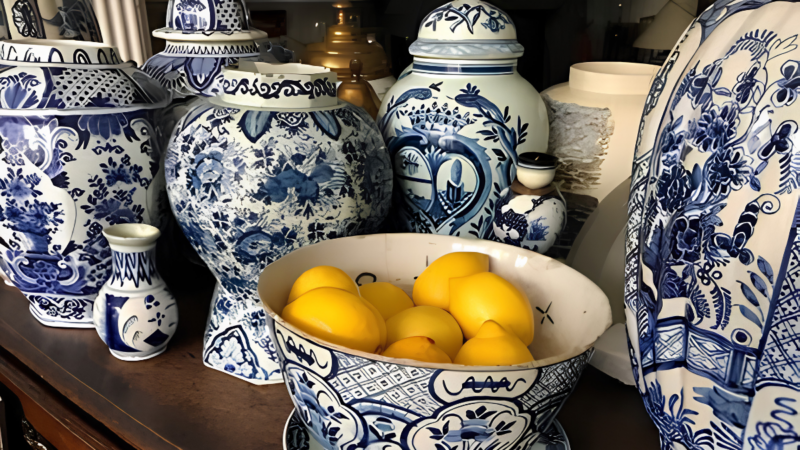
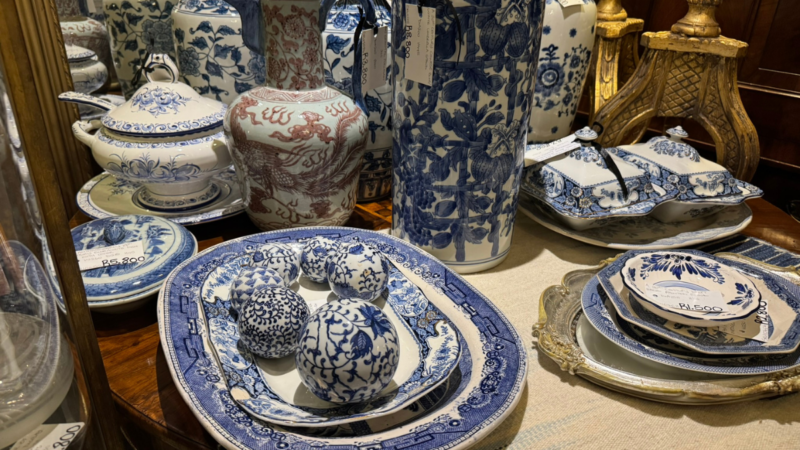
blue and white antiques on a table

Why Blue and White Antiques in Trendy Spaces

When design experts analyse why a specific asset category transitions into a modern staple, they point directly to its unmatched versatility. The stark, crisp contrast of vivid cobalt pigment against a bright ceramic white acts essentially as a luxury neutral. It has the rare capacity to complement almost any palette—from soft sand tones and bleached woods to moody, dark charcoal paint schemes.

Furthermore, today’s collector is prioritising an intentional “Utility-to-Investment” shift. Rather than purchasing temporary decorative accessories that depreciate the moment they leave the shelf, design aficionados are sourcing authenticated physical heirlooms. Pieces carrying historic significance from the 19th and early 20th centuries hold their intrinsic value while adding an unmistakable patina of prestige to everyday living areas.

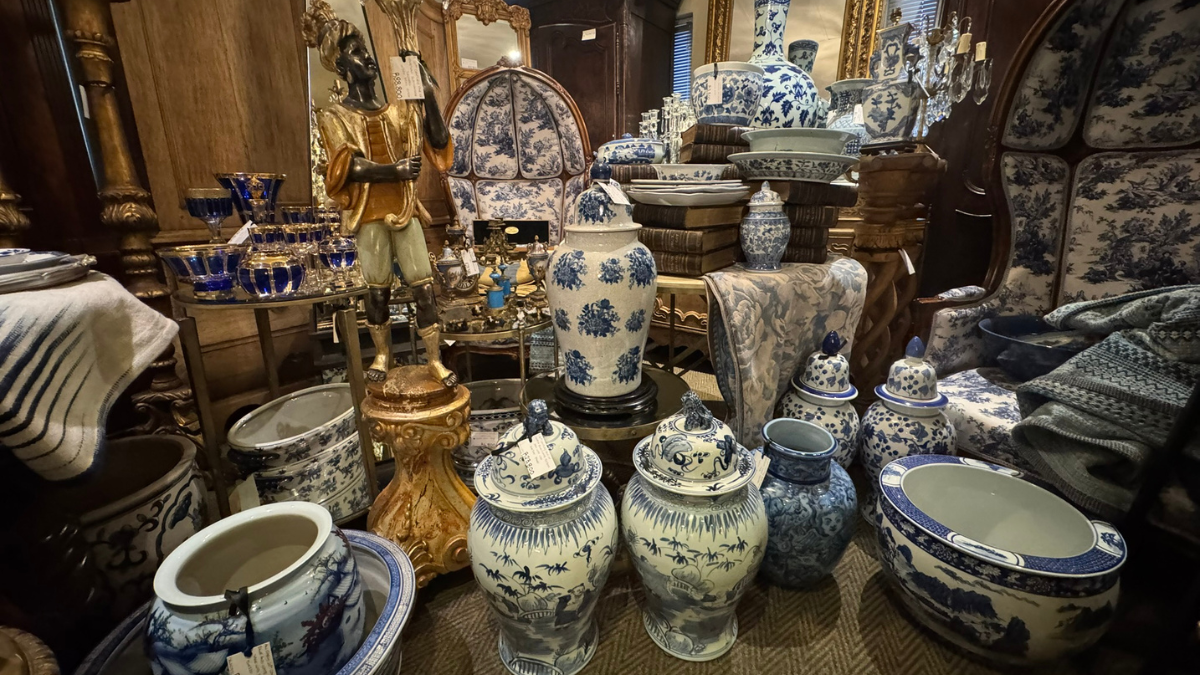
blue and white antique collection from The Crown Collection

Why style blue and white porcelain with modern materials? The smooth, patterned precision of hand-painted ceramics creates a perfect aesthetic juxtaposition against the raw texture of industrial concrete, transparent glass, or brushed brass finishes. It effortlessly bridges the gap between traditional craftsmanship and modern design.

Bringing the Look Home

The absolute golden rule of styling historic blue and white porcelain in a trendy home is to avoid treating them like fragile museum artefacts hidden away in closed cabinets. Instead, integrate them directly into highly functional, lived-in vignettes.

Here is how premium design spaces are styling these pieces right now:

Construct High-Contrast Focal Points: Place large-scale porcelain statement items on sleek, contemporary surfaces. A beautifully carved console or a clean, modern raw-concrete pedestal becomes an instant conversation starter when topped with a grand historic vase or jar.

Layer Spatial Dimensions with Horology: Don’t limit your blue and white palette strictly to jars. Incorporating functional mechanical antiques, such as an authenticated 19th-century mantle set, introduces an element of movement and deep character that static frames simply cannot replicate.

Form Cohesive Groupings: Group items in odd numbers (threes or fives) using varying heights and structural profiles. Aligning traditional ginger jars alongside classical figures or vintage barware creates a rich, narrative-driven layout on sideboards and dining settings.

From Our Showroom Floor to Your Front Door

At The Crown Collection, our studio is styled to inspire. We love pairing the fine, patterned details of porcelain with the rich, aged patina of dark Victorian woods, or letting the intricate cobalt motifs pop against the soft, neutral, lightly distressed finishes of bleached French provincial armoires.

Whether you want to build a dramatic plate wall in your dining room, add a striking ginger jar to a living room coffee table, or feature a magnificent porcelain lamp in an elegant bedroom entryway, the right piece is waiting for you.

Curated Investment Highlights Currently in Stock:

  1. Early 20th Century Set of Twelve Moser Cobalt Blue & Gilt Glasses (R78,800): An elite hand-painted luxury glassware set comprising twelve exceptional glasses, a matching chalice, decanter, vase, and a three-piece decorative cluster including an ornate lidded bonbon dish.
  1. 20th Century Vietnamese Glazed Jardinière of Large Proportions (R28,800): A bold, structural glazed piece featuring deep colouration, ideal for anchoring extensive interior layouts or undercover veranda spaces.
  1. 20th Century Pair of Chinese Blue & White Foo Dog Jars (R23,800): A beautifully balanced pair of authenticated ceramic jars complete with matching lids and traditional protective iconography.
  1. Antique 20th Century Set of Three Chinese Porcelain Statues (R15,800): An expressive, hand-detailed collection of three porcelain character figures that introduce immediate architectural layering.
  1. Antique 19th Century Chinese Cobalt Blue Porcelain Bowl (R11,800): A beautifully preserved historical shallow bowl featuring crisp hand-brushed cobalt variations.

Shop the Trend Directly

Ultimately, styling with blue and white antiques is all about balance. When you pair a historic piece with a clean linen armchair or a contemporary surface, something magical happens: the antique stops looking old, and the modern space stops looking cold.

To explore our full, gorgeous range of stunning blue and white decor accessories and find the perfect statement piece for your home, click the link below to browse our online boutique.

Browse and Buy Your Blue & White China, Ceramics, and Porcelain

Prefer a tactile shopping experience? You can also visit us in-studio at 20 Ballyclare Drive, Bryanston, Johannesburg, to view our beautifully styled interior displays firsthand.

A Guide to French Chair Styles, Silhouettes, and Designs

Categories: Articles, Blog|Tags: , , |

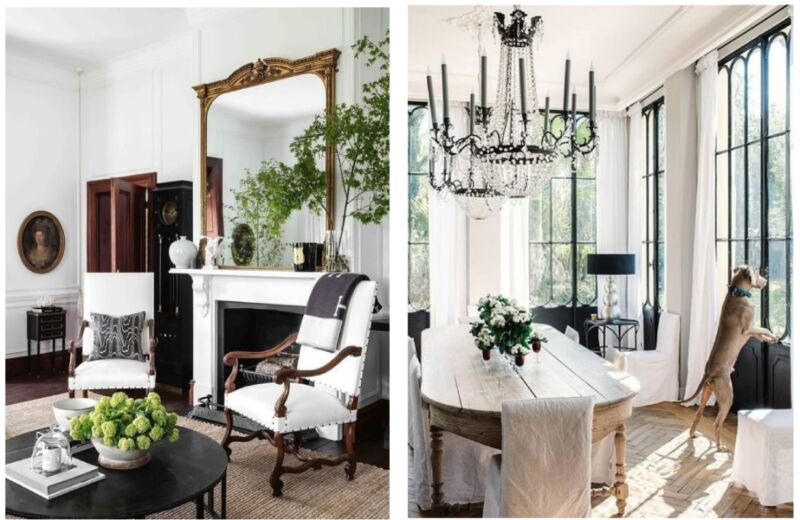
The French chair is the quintessential accent piece of interior design. Whether it’s a regal bergère or a delicate fauteuil, these chairs introduce a sense of je ne sais quoi that balances the clean, often clinical lines of modern architecture.

At The Crown Collection, we specialise in hand-picked antique French chairs, offering a curated selection that spans centuries of craftsmanship, from the gilded opulence of the Rococo era to the refined restraint of Neoclassicism.
Shop French Chairs Online

1. Understanding the Silhouettes
To find the chair that is just right for your space, you must first understand the primary movements in French furniture design.

To find the chair that is just right for your space, you must first understand the primary movements in French furniture design. 

Style Period Key Visual Identifiers Design Feel
Louis XV Rococo (mid-1700s) Curved Cabriole legs, asymmetrical floral carvings, serpentine frames. Romantic & Whimsical
Louis XVI Neoclassical (late-1700s) Straight, fluted legs (resembling Greek columns), geometric symmetry. Elegant & Disciplined
French Provincial Regional France Ladder backs, natural oak or fruitwood, rush or simple fabric seats. Rustic & Grounded
Directoire Post-Revolution Sparsely decorated, mahogany wood, rolled klismos backs. Modern & Minimalist

Get Inspired By French Decor

2. Iconic French Chair Types

Beyond the period style, the chair’s type dictates its role in your decor story.

The Bergère (The Enclosed Armchair)

A bergère is characterised by its upholstered sides (between the arms and the seat). It is deep, wide, and designed for maximum comfort.

  • Modern Use: Perfect as a reading chair in a main suite or as a pair of anchors flanking a fireplace.

The Fauteuil (The Open Armchair)

Unlike the bergère, the fauteuil has open sides. It feels lighter and more airy, making it ideal for smaller apartments or as occasional seating.

  • Modern Use: Use a pair of Louis XVI fauteuils to create an intimate conversation vignette at the foot of a bed or alongside a contemporary coffee table.

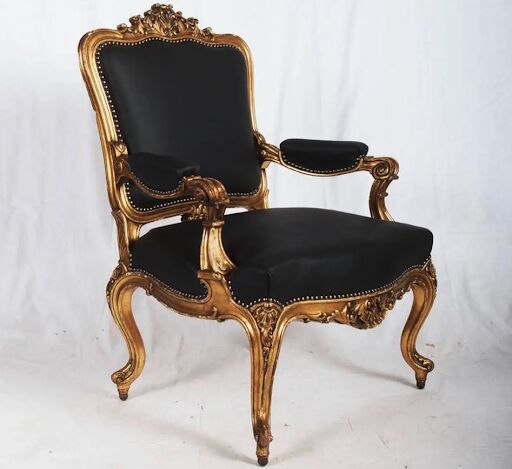
The Giltwood Chair (The Jewellery Piece)

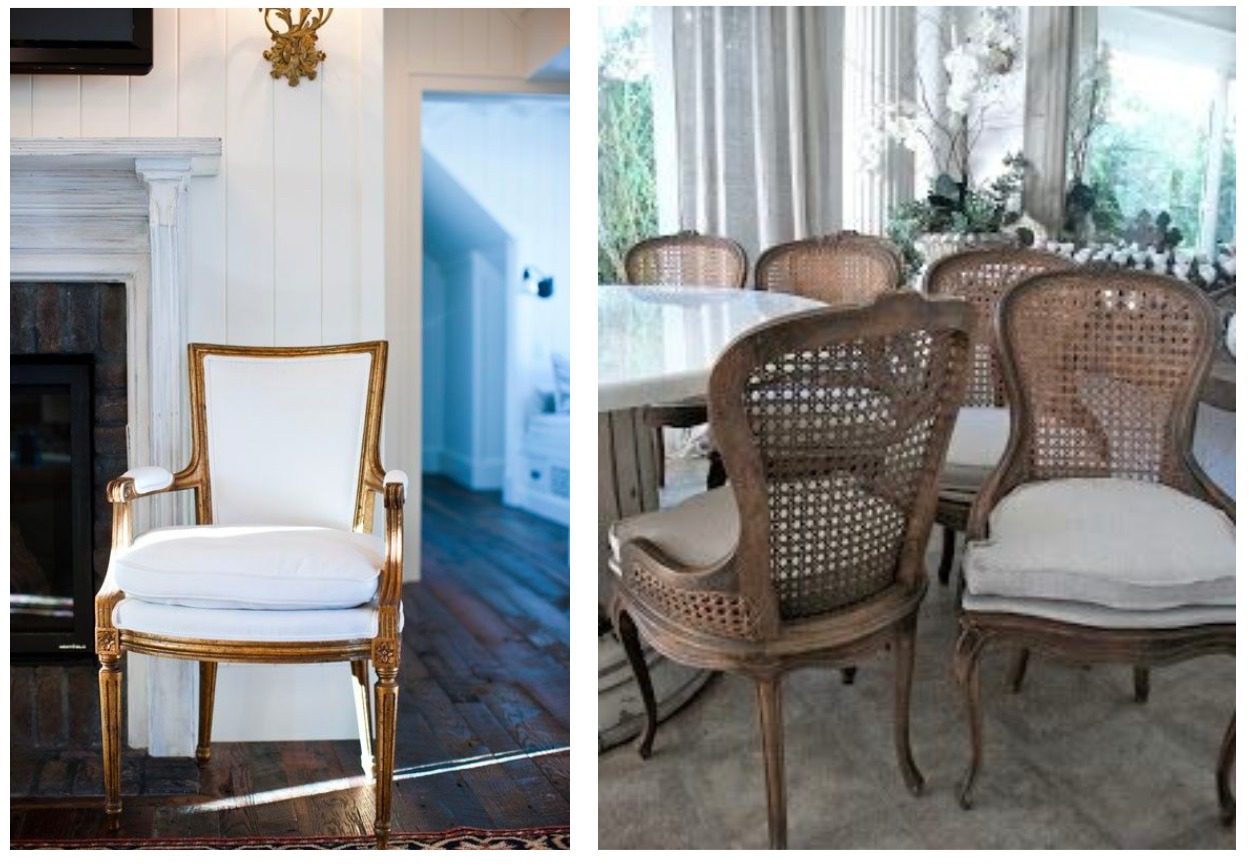
Often featuring a golden patina, gilded French chairs act as the Little Black Dress of interior design. They add a touch of bling and sophistication to neutral, grey, or white colour schemes.

Modern Use: A single gilded chair in an entrance hall next to a modern console creates an instant high-fashion statement.

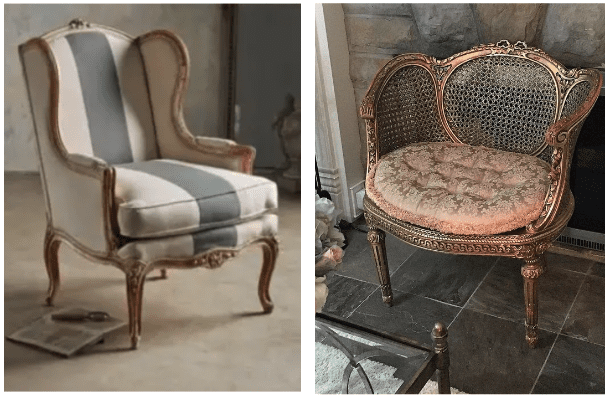
French occasional chairs

3. Customising Your Antique French Chair

One of the greatest advantages of an antique French chair is its ability to be reimagined. At The Crown Collection, our in-house restoration team can transform a 19th-century frame to suit your specific brief:

  • Bleaching & Stripping: Provide a raw, natural wood finish that fits the French Country or Scandi-Chic aesthetic.
  • Hand-Gilding: Adding silver or gold leaf to elevate a plain frame into a masterpiece.

4. How to Style French Chairs in Modern Spaces

  • The Power of Pairs: Use a pair of identical Louis XVI chairs to create symmetry in a larger room.
  • The Solo Protagonist: Place a single, dramatically carved French chair next to a large-scale modern artwork to enhance the characteristics of both.
  • The Textural Layer: Pair a weathered Provincial chair with a modern rug or a sleek metal desk to ground the contemporary space with aged authenticity.

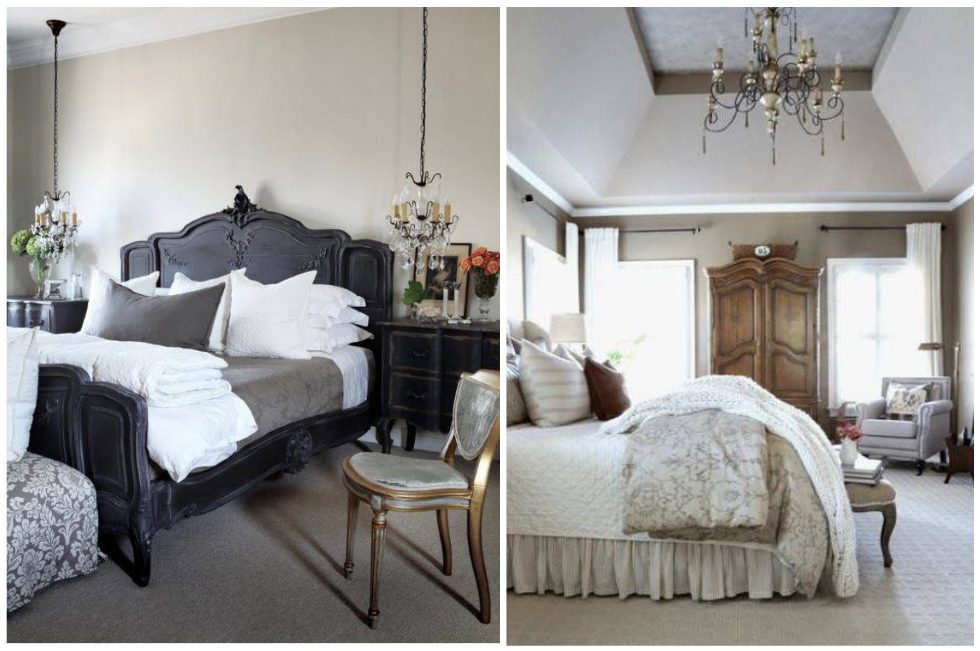
Antique French chandeliers in the bedroom

Find Yours at The Crown Collection

With over 280 antique chairs on display, The Crown Collection is South Africa’s premier emporium for French flair. Shop our curated range online or visit our Bryanston showroom to find a piece that brings history, beauty, and bespoke charm into your home.

Browse Our Exclusive Collection of French Chairs

Top FAQs About French Chairs

Q: What is the difference between a Louis XV and a Louis XVI French chair? The primary difference lies in the legs. Louis XV chairs feature curved, feminine cabriole legs and ornate, asymmetrical carvings. Louis XVI chairs are Neoclassical, featuring straight, fluted legs and symmetrical, geometric designs inspired by ancient Rome and Greece.

Q: What is a French Bergère chair? A bergère is a French armchair with closed, upholstered sides. It usually features a separate seat cushion and is designed for deep, comfortable lounging, unlike the fauteuil, which has open sides.

Q: Can you customise antique French chairs? A: Yes. Antique frames are remarkably sturdy. Techniques like wood bleaching, French polishing, and bespoke upholstery allow you to modernise the look of a French chair while preserving its historical value.

Antique Chairs: A Guide to Styles in Modern Decor

Categories: Articles, Blog|Tags: , , |

What makes a chair an antique? Traditionally, a chair is classified as an antique if it is over 100 years old. These pieces are defined by artisanal joinery, solid wood construction (such as walnut, mahogany, or oak), and period-specific design movements.

At The Crown Collection, we curate over 200 high-authority antique chairs, offering a seamless blend of historical craftsmanship and contemporary utility.

Shop Our Antique Chairs Online

Why Antique Chairs are the Ultimate Design Anchor

Antique chairs offer three distinct advantages for 21st-century interiors:

  • Structural Contrast: The organic curves of a Rococo chair break the boxy lines of modern architecture.
  • Sustainability: Antique furniture represents the pinnacle of the circular economy, built to last centuries, not seasons.
  • Customisation: Period frames are easily reimagined through modern upholstery, bleaching, or gilding.

Essential Antique Chair Styles for Modern Spaces

When sourcing from a premier stockist like The Crown Collection, these styles offer the most versatile design impact:


Varying in shape, size, style and strength, antique chairs are probably the most versatile and diverse furniture items.

Style Era/Origin Identifying Characteristics Best Use
French Provincial 18th Century Natural wood, ladder backs, rush seats Breakfast nooks & Sunrooms
Chinese Yoke

Ming DynastyΩ

High backs, minimalist lines, s-curve splat Minimalist entryways
Louis XV/XVI French Classic Cabriole legs (XV) or Fluted legs (XVI) Occasional bedroom seating
Rattan/Dome Colonial/Victorian Woven textures, high-back silhouettes Textural layering in lounges

Our Stylish Collection Boasts Eye-Catching Antique Chairs

Mix-and-match antique chairs in modern spaces

How to Style Antique Chairs in Contemporary Interiors

For a sophisticated Modern-Antique mix, designers utilise the following placement strategies:

1. The High-Contrast Pairing

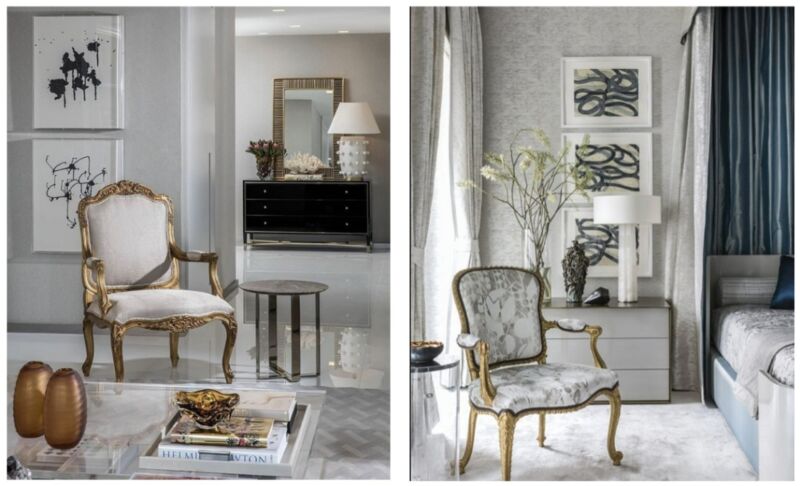
Place a pair of ornate gilt-wood chairs flanking a minimalist modern console or beneath a large-scale abstract painting. This creates a design tension that makes the room feel curated rather than shopped.

2. The Eclectic Dining Narrative

Break the monotony of a modern dining suite by replacing standard chairs with a collection of mismatched antique chairs. Keeping the timber tone consistent (e.g., all walnut or all bleached oak) creates a cohesive but storied look.

3. The Functional Sculpture

In small spaces like bathrooms or narrow hallways, a single Chinese Yoke chair or a delicate armchair serves as a functional art piece, utilising vertical space without overwhelming the floor plan.

If you are looking for a piece of furniture to make an impact or elevate a space, then look no further than the strong silhouette, scale or colour of an antique chair.

How to Style Antique Chairs in Contemporary Interiors

For a sophisticated Modern-Antique mix, designers utilise the following placement strategies:

1. The High-Contrast Pairing

Place a pair of ornate gilt-wood chairs flanking a minimalist modern console or beneath a large-scale abstract painting. This creates a design tension that makes the room feel curated rather than shopped.

2. The Eclectic Dining Narrative

Break the monotony of a modern dining suite by replacing standard chairs with a collection of mismatched antique chairs. Keeping the timber tone consistent (e.g., all walnut or all bleached oak) creates a cohesive but storied look.

3. The Functional Sculpture

In small spaces like bathrooms or narrow hallways, a single Chinese Yoke chair or a delicate armchair serves as a functional art piece, utilising vertical space without overwhelming the floor plan.

Giving Antiques a New Life

The Crown Collection features an in-house restoration team specialising in bespoke finishes. To modernise an antique frame, consider:

  • Bleaching: Lightens dark woods to fit a Scandi-French or coastal aesthetic.
  • Gilding: Adds a 24k gold leaf or silver finish for high-glamour interiors.
  • Upholstery: Pairing a 19th-century frame with bold geometric patterns, animal prints, or high-performance velvets.

Source Your Hero Piece at The Crown Collection

With the largest emporium of handpicked antiques in South Africa, The Crown Collection is the definitive destination for architects, designers, and private collectors.

  • Visit Our Studio: 20 Ballyclare Drive, Bryanston.
  • Shop Online: Browse our digital gallery of over 280 unique chairs.
  • Nationwide Delivery: We offer white-glove delivery to Cape Town, Stellenbosch, and beyond. 

Visit Our Showroom In Bryantson

Frequently Asked Questions: Antique Chairs

  1. How can you tell if a chair is a genuine antique? A genuine antique chair (100+ years old) typically shows signs of hand-craftsmanship that modern reproductions lack. Look for irregularity in the joinery (such as hand-cut dovetails), natural wear on the bottom of the feet or armrests, and original hardware. Unlike mass-produced furniture, antique chairs are often made from solid hardwoods such as mahogany, oak, or walnut rather than veneers or particleboard.
  2. Can antique chairs be used daily in a modern home? Absolutely. While they appear delicate, antique chairs were constructed with superior joinery techniques such as mortise-and-tenon, making them remarkably durable. To ensure they withstand modern use, we recommend professional restoration to tighten frames and the use of high-performance contemporary fabrics for upholstery. At The Crown Collection, our in-house team ensures every piece is structurally sound for everyday living.

3. Is it better to keep the original finish or restore an antique chair? This depends on the piece’s provenance and your personal aesthetic. Purists often prefer the original patina, which carries the wood’s history. However, for modern interiors, techniques such as wood bleaching, gilding, or staining can help an antique chair blend seamlessly with a contemporary palette. Customising the finish does not necessarily decrease the soul of the piece; rather, it extends its lifecycle for a new generation.

Antique silver is always in style | Classic & Christofle silverware for everyday use

Categories: Articles, Blog, Style|Tags: , , , , |

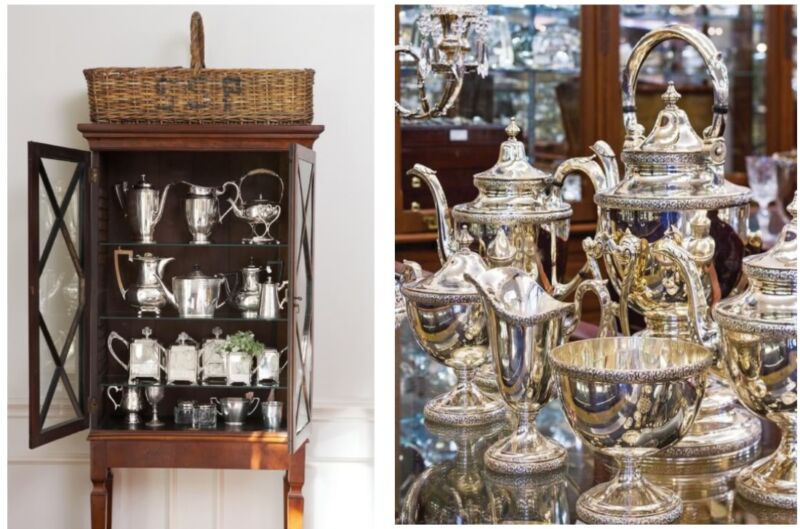
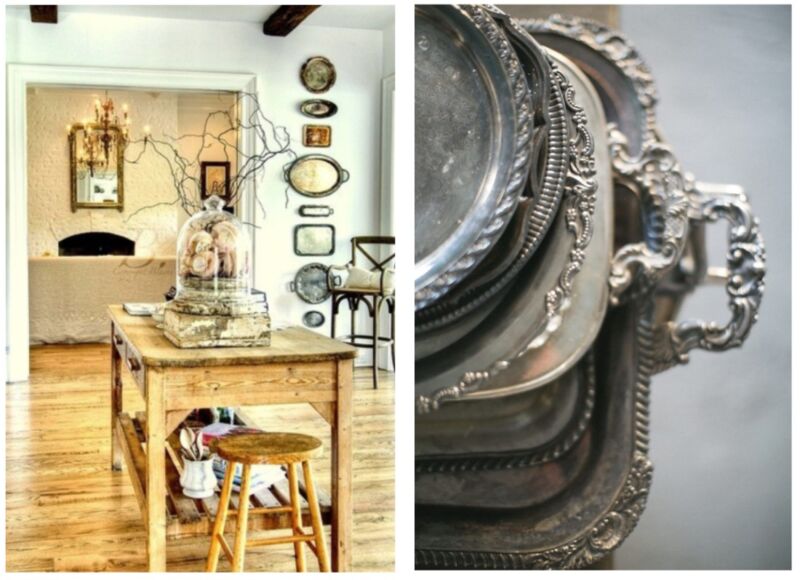
Silverware carries a kind of quiet luxury — cool, polished, reflective, with a depth and history that few materials match. Silver’s reflective surface brightens rooms and adds a luminous accent that complements wood, stone, crystal, ceramic, and fabric. It also adds sophistication, richness and a sense of ritual, complementing all design styles: traditional, modern, or somewhere in between. 


The biggest impact is often made when silver collectables are grouped en masse to accentuate the ambience of any space, bringing visual surprise, an elegant touch, and a touch of glamour to every room and everyday life.

At The Crown Collection, our silver pieces aren’t just functional, they’re décor statements; perfect for use and for showing off.

At The Crown Collection, our silver pieces aren’t just functional; they’re décor statements, perfect for both use and display.

Why Christofle matters | A legacy of silver excellence

Founded in Paris in 1830 by Charles Christofle, Christofle has long been regarded as one of the most prestigious silverware houses in the world.

  • Craftsmanship & heritage. Christofle pioneered the use of electroplating in France in 1842 — a technique that enabled high-quality silver plating, making beautiful silverware more accessible while retaining a luxurious feel.
  • Design meets art. Over nearly two centuries, Christofle has collaborated with renowned artists and designers — from the 19th-century sculptors to modern creatives — blending fine craftsmanship with artistic vision. 
  • From royal tables to your home. Once gracing the tables of emperors, kings and aristocrats, Christofle today brings that legacy of elegance into modern homes around the world — transforming meals into refined experiences.

Founded in Paris in 1830 by Charles Christofle, Christofle has long been regarded as one of the most prestigious silverware houses in the world.

Due to this past and ongoing commitment, Christofle silverware is a testament to both investment and lifestyle.

Everyday rituals | Silver tea & coffee sets

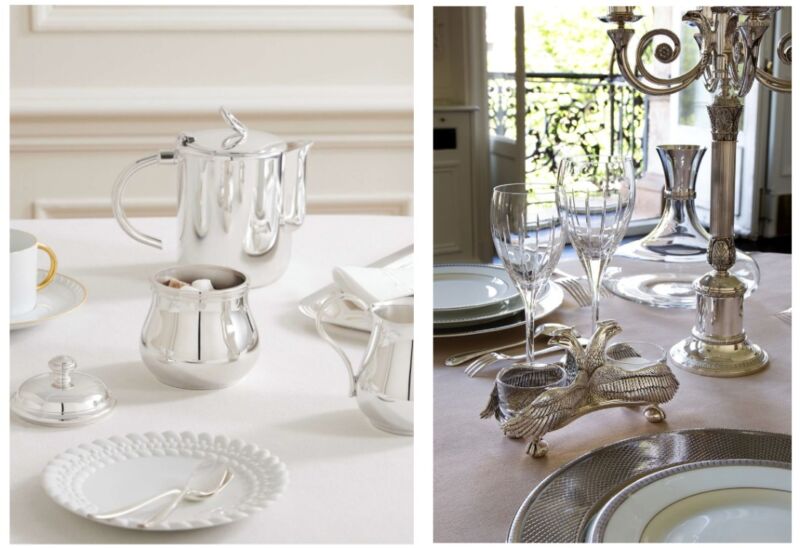
There’s something special about serving tea or coffee from a gleaming silver set — it transforms a simple moment into a memorable occasion. 

At The Crown Collection, our classic 19th-century John Turton Victorian Silver-Plated Tea/Coffee Set brings vintage grandeur to the table — perfect for long, lingering breakfasts or formal high-tea afternoons.

If you prefer a slightly more contemporary feel, our Silver Plated Five‑Piece Tea/Coffee Set and Tray With Wooden Handles is ideal: sleek, elegant and functional — great for everyday use or special guest occasions.

When not in use, silver tea and coffee sets make beautiful display pieces.

When not in use, tea and coffee sets make beautiful display pieces.

Placed on a sideboard, open shelf or glass-fronted cabinet – or perhaps against a backdrop of other silver trays – they become a nod to a traditional showcasing of fine tableware

Standing tall | Candelabras & candlesticks 

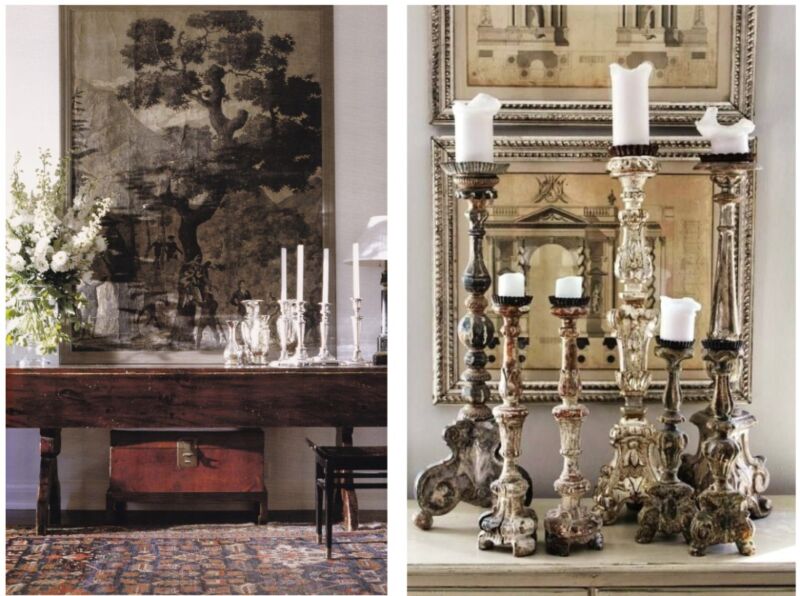
Candlesticks and candelabras, carved in silver — whether ornate or minimalist — are among the most dramatic ways to add vertical interest and ambience to a home. Silver catches candlelight and magnifies it, projecting warmth and glow.

Arranged on a dining table, mantlepiece, or console in an entryway, silver candelabras announce elegance and heritage. And when paired with tall taper candles — white for a classic look, or coloured for a seasonal mood — they instantly transform even a casual dinner into something special. (Read this blog if you want more inspiration on setting the scene with silver candelabras.) 

Arranged on a dining table, mantlepiece, or console in an entryway, silver candelabras announce elegance and heritage

Browse our beautiful collection.

Tablescaping flair | Trays, cutlery sets & food domes 

Mixing function with display is where antique silver really ‘steps up to the plate’ as a versatile decor item and accessory. 

Silver Trays | The Silent Anchor

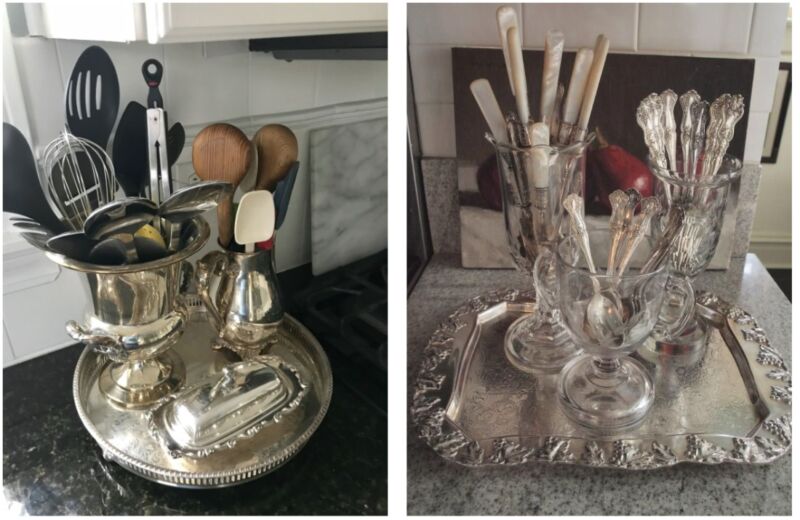
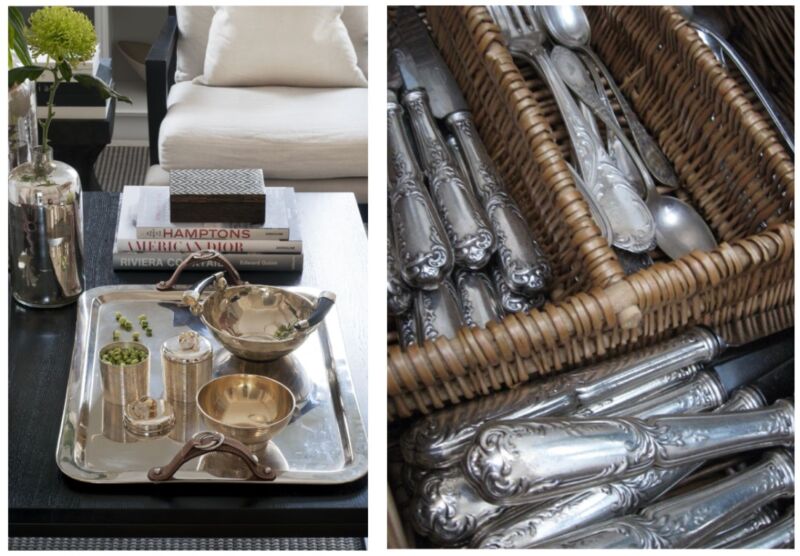
A silver tray does more than hold objects — it frames them, transforming loose items on a coffee table, sideboard or drinks cart into a unified, curated vignette. 

A rectangular or oval tray can be used to anchor a coffee table, sideboard or vanity display: perhaps a small vase with seasonal flowers, a scented candle or two, and a stack of books. Or in a kitchen, it could gather oils, salt & pepper, a salt cellar, and maybe a small bowl of fresh herbs — beautiful and useful.

A rectangular or oval tray can be used to anchor a coffee-table, sideboard or vanity display: perhaps a small vase with seasonal flowers, a scented candle or two, and a stack of books.

Our canteen cutlery sets make an ideal base for dinner parties — and for everyday meals that you want to feel a bit elevated.

 (Visit this blog to read more about how to make your silver cutlery ‘shine’ at your next dinner party. )

Food Domes & serving pieces | Drama at the table

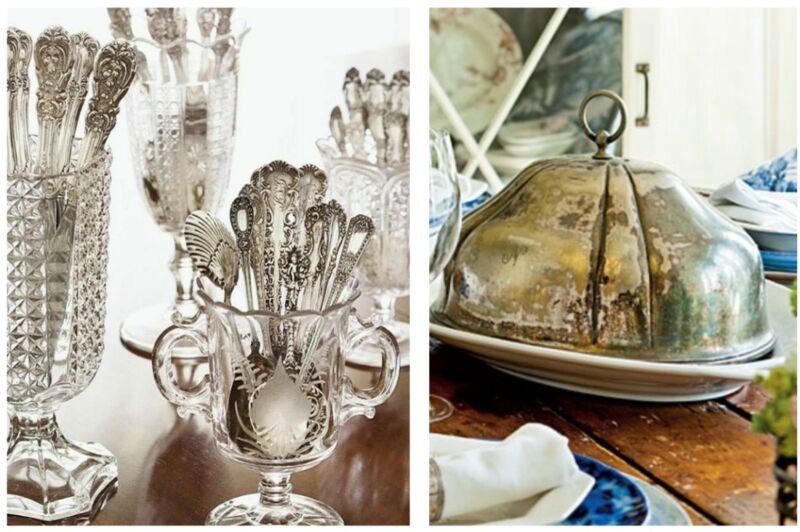
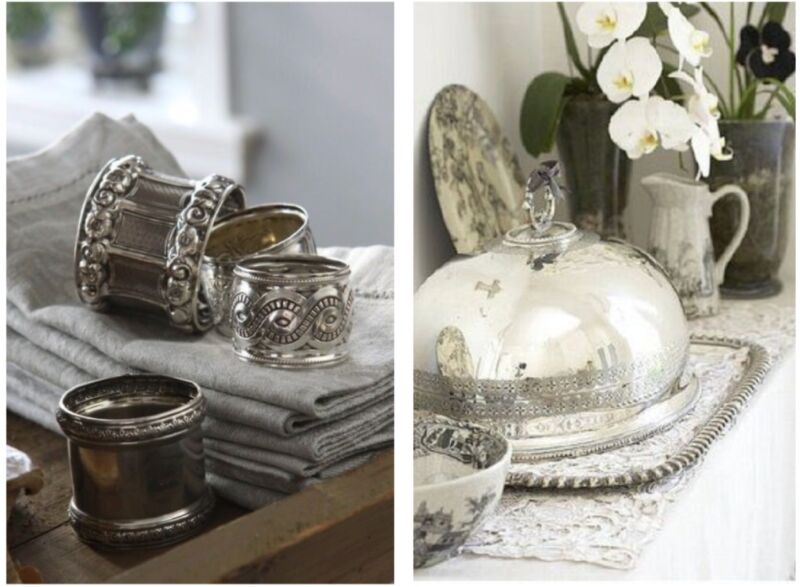
There’s something old-worldly and dramatic about serving dishes under silver domes — the little moment of revealing what lies underneath adds ceremony. Silver food domes and cloches, once reserved for aristocratic dining rooms, now bring theatrical flair to modern tables. 

Silver food domes and cloches, once reserved for aristocratic dining rooms, now bring theatrical flair to modern tables.

By pairing silver trays, serving dishes and cloches with polished silver cutlery, you create a completely coordinated, luxurious dining tableau — whether for holiday meals, dinner parties, or intimate dinners.

Large serving pieces, ornate platters, and domes become functional art.

When not in use, many of these also shine as décor: hung on a dining-room wall, displayed on a sideboard, or arranged on an open shelf or cabinet.

Large serving pieces, ornate platters, and domes become functional art.

Maintaining the lustre | ‘Spit & polish’

Silverware looks its best when properly cared for. Because silver is softer than stainless steel, avoid washing the two metals together; the stainless steel can scratch or damage the silver. 

When polishing, rub lengthwise (not in circular motion) to avoid scratches. For intricately detailed items — candlesticks, ornate trays — use a soft brush (e.g. an old toothbrush) to reach crevices.

Over time, the pieces develop patina, and with regular gentle polishing, they retain their glow and integrity.

Avoid letting candle wax drip directly onto silver candlesticks — let the wax cool and harden, then gently remove. For storage: flatware should lie flat and separated (not stacked) to avoid scratches and warping. 

Care nourishes the silver. Over time, the pieces develop patina, and with regular gentle polishing, they retain their glow and integrity.

Silverware at The Crown Collection | The perfect gift

Silverware always makes a statement. That is why silver pieces have endured as timeless and beloved gifting options — for weddings, anniversaries, milestone birthdays, and holiday celebrations. 

Each silverware item carries both sentimental value and practicality, and in many homes, it becomes an heirloom, passed from one generation to the next. 

Whether you’re styling your own space or shopping for thoughtful Christmas or year-round gifts, investing in silverware from The Crown Collection offers timeless beauty, enduring value, and a touch of refined glamour.

If you’re looking to gift a silver piece from our collection, we assure you that we deliver quickly.

Antique settees in every shape and size | Styling ideas for every room in your home

Categories: Articles, Blog, Style|Tags: , , , , , |

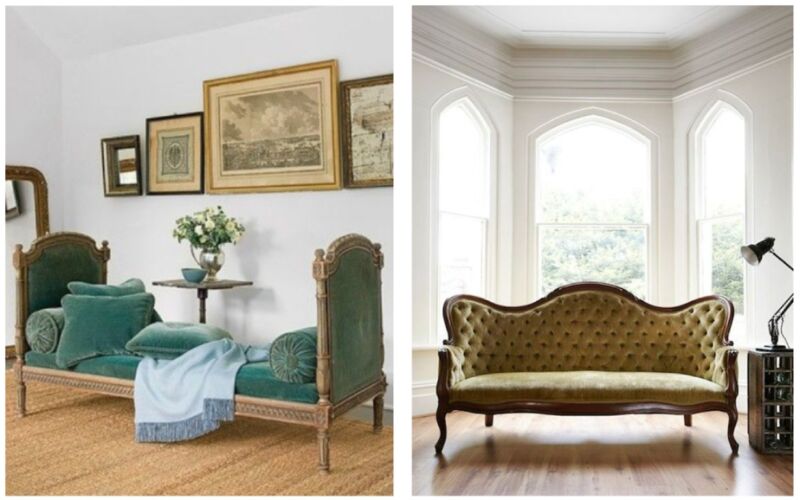
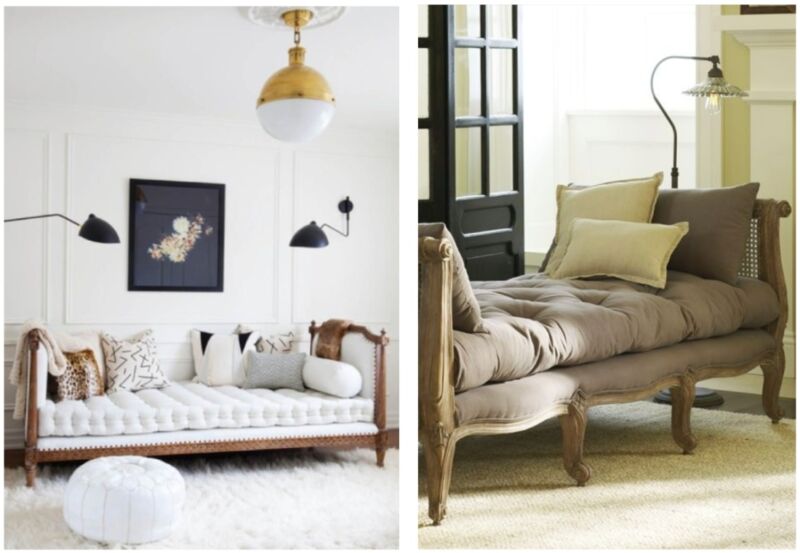
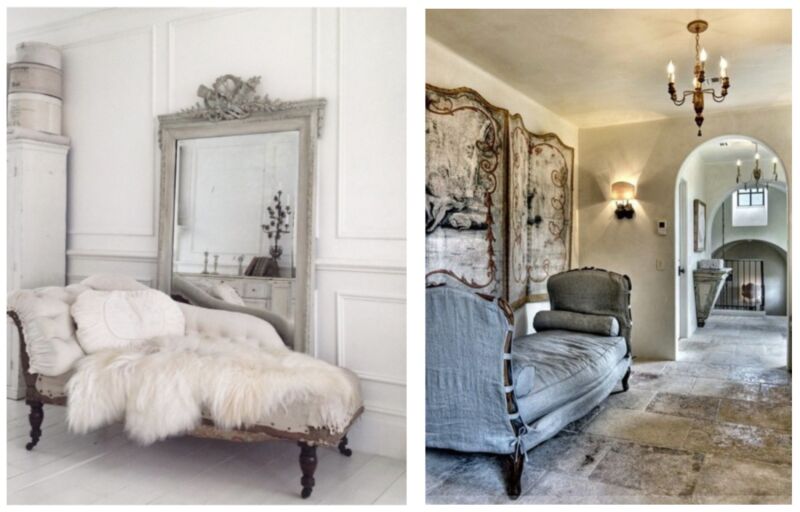
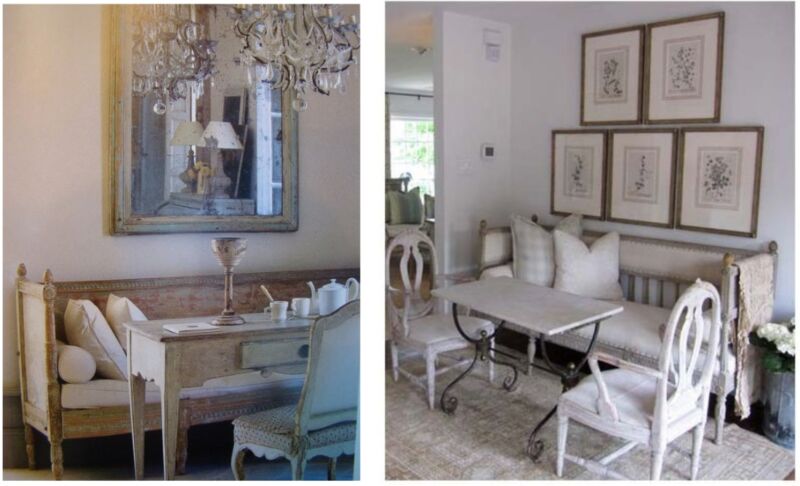
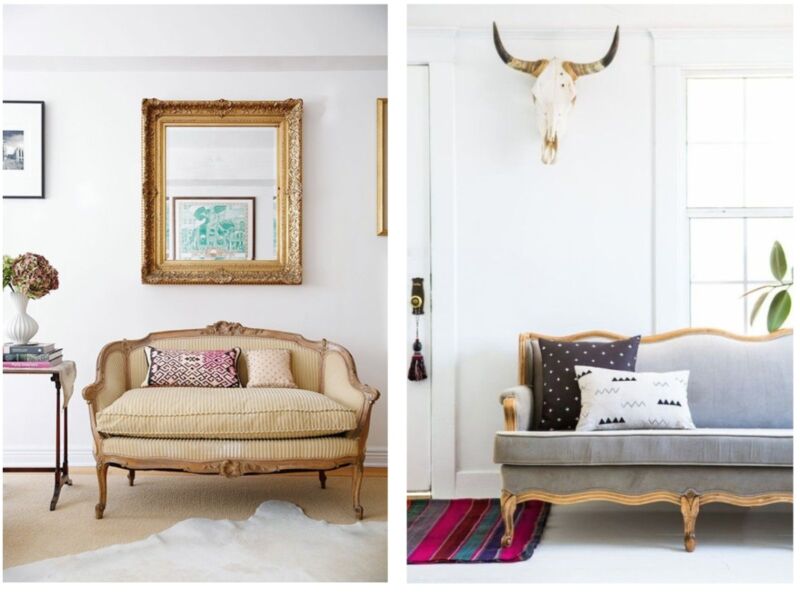
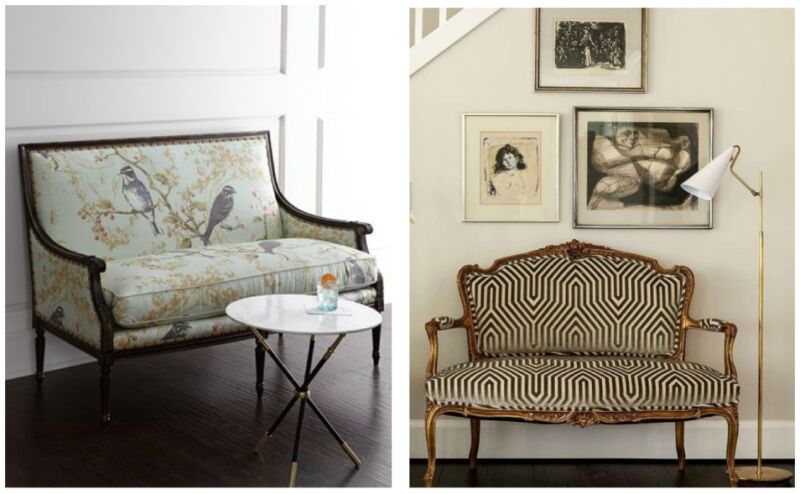
Have you ever walked into a room and felt something was missing—an empty corner, a lack of warmth, or a need for a statement piece? A settee might be the unexpected answer. Antique settees – including French-style daybeds and chaises – bring elegance, charm, and comfort into any space, especially in modern settings. Defying design trends, they blend decorative beauty with functional design. Yet many homeowners face the ‘Goldilocks dilemma’ — the search for a settee that feels ‘just right’  for their specific home, style, and space.


At The Crown Collection, you’ll find South Africa’s largest range of antique and French-style settees, daybeds and chaise lounges. Each piece is handpicked and tells a story, and many can be reupholstered in a fabric of your choice, allowing you to match your settee perfectly to your interior style.

At The Crown Collection, you’ll find South Africa’s largest range of antique and French-style settees, daybeds and chaise lounges.

The timeless appeal of antique settees

The design verdict? Antique settees never seem to go out of date and always add personality to any room. 

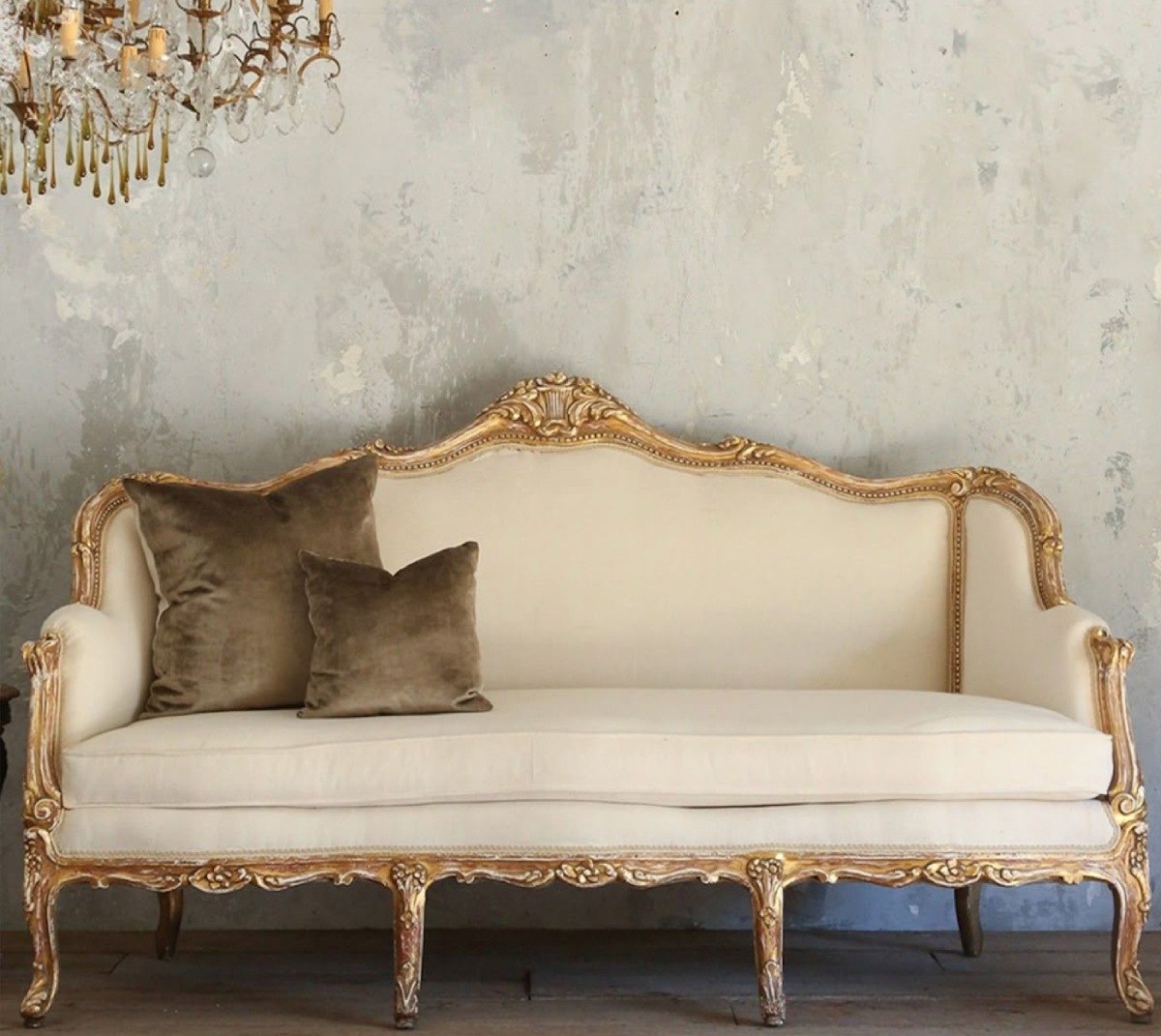
Their sculpted wood, graceful lines, gilded patina, and historic silhouettes offer instant character.

Leather-upholstered antique settees also make a striking statement, combining traditional craftsmanship with a refined, contemporary edge.

Pieces such as a Louis XV carved settee or a gilded rattan-back settee lend classic charm and visual interest, and are ‘just right’ in modern homes, vintage-inspired interiors, and eclectic spaces.

Pieces such as a Louis XV carved settee or a gilded rattan-back settee lend classic charm and visual interest, and are ‘just right’ in modern homes, vintage-inspired interiors, and eclectic spaces.

This ability to transform a room’s visual aesthetic is just one reason many homeowners are choosing antique settees or chaises as statement accents. Their craftsmanship stands out in today’s world of fast furniture. 

TAKE A BROWSE | Each piece from our collection has a history that contributes to its unique décor story — and now is the perfect moment to explore a settee that can bring that same character and timeless beauty into your own home.

French-style settees for classic modernity

French-style settees are the beloved go-to seating options for interior designers and homeowners looking for the wow factor in contemporary spaces. 

Because they don’t go out of fashion, they are worth the investment

Their refined frames, cabriole legs, and upholstered finishes create a sense of softness and luxury in any space.

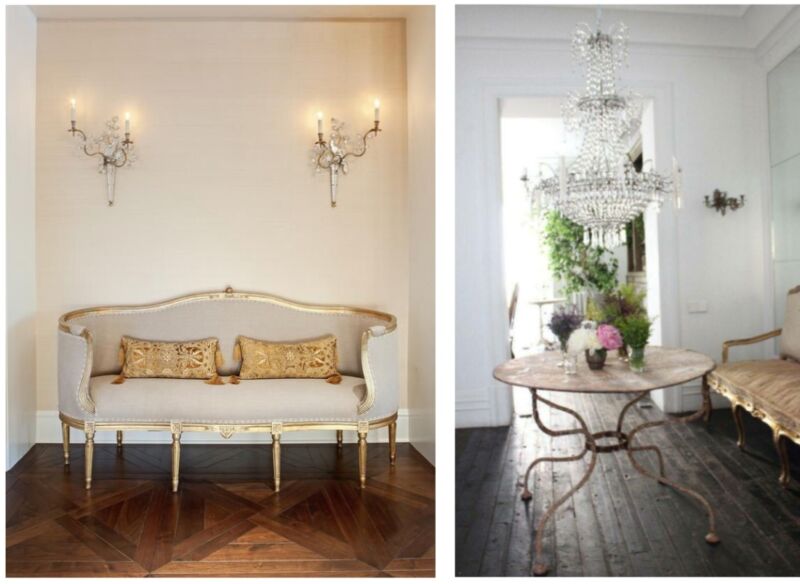
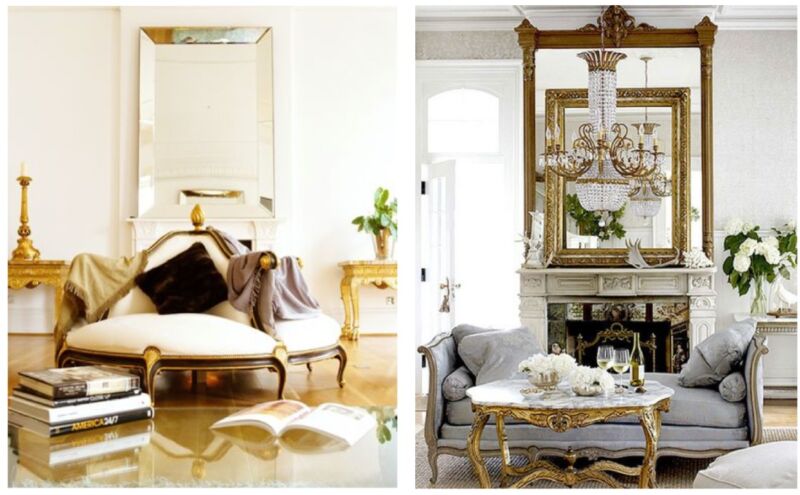
Antique and French-style settees, sofas, daybeds, and chaise lounges also blend seamlessly with chandeliers and gilded mirrors, and pair beautifully with rustic décor and farmhouse antiques. The contrast between refined French curves and natural textures creates a balanced and visually satisfying interior.

How to use settees functionally in your home

Although undeniably beautiful to the eye, antique settees are more than decorative items.

Offering practical seating in various spaces, their compact size makes them ideal for almost any room. Here are a few functional ways to incorporate them:

Entryways and hallways

An antique settee creates an inviting first impression and serves as a stylish place to sit while putting on shoes, or as a temporary landing place for jackets, etc. A piece like a carved antique daybed adds charm to an otherwise overlooked area.

Although undeniably beautiful to the eye, antique settees are more than decorative items. Offering practical seating in various spaces, their compact size makes them ideal for almost any room.

Bedrooms

Place a settee at the foot of your bed for a luxurious feel. Choose a soft upholstered French chaise for comfort and elegance. It becomes a personal retreat for reading or relaxing.

Living rooms

Use a settee to complement sofas and armchairs. A French-style settee adds texture and depth while introducing a unique silhouette that breaks the monotony of large sofas.

Use a settee to complement sofas and armchairs. A French-style settee adds texture and depth while introducing a unique silhouette that breaks the monotony of large sofas.

Home offices

Create a cosy seating nook with a slim antique settee. It provides comfort without overwhelming the room. A structured French antique sofa adds authority and charm to a professional environment.

Dining spaces

For a chic look, antique settees are wonderful replacements for dining chairs. A small settee with bold upholstery redefines a dining corner by adding comfort and a sense of European café style. (Visit this blog for more inspiration on the settee dining trend.)

For a chic look, antique settees are wonderful replacements for dining chairs.

Styling settees for maximum visual impact

Décor styling brings out the best in these versatile pieces. Here are simple ways to enhance your settee:

Add cushions and throws

Soft cushions and textured throws add dimension. They also allow you to bring seasonal colours into your décor.

Soft cushions and textured throws add dimension to antique settees. They also allow you to bring seasonal colours into your décor.

Pair with accent tables

An antique side table or gilded console strengthens the settee’s presence. French-style pieces match beautifully with carved wooden tables or marble-topped consoles.

Use art to frame the space

To create a striking focal point, hang artwork or a decorative mirror above the settee. For a classic museum-style effect, place a decorative settee under a framed antique tapestry. 

Choose the right fabric

The Crown Collection offers reupholstery in a wide range of fabrics. This customisation ensures your piece suits your decor. Velvet, linen, damask, and cotton blends all work well. Upholstery is the easiest way to modernise an antique or enhance its traditional look.

The Crown Collection offers reupholstery in a wide range of fabrics. This customisation ensures your settee suits your decor.

Antique settees that tell a story

When you choose an antique settee from The Crown Collection, you’re investing in quality and history. Pieces like French chaises, curved antique daybeds, and ornate sofas bring character to your home with every carved detail highlighting craftsmanship.

The easy versatility of antique settees, French-style daybeds, sofas, and chaise lounges makes them perfect statement pieces for both formal and casual spaces. 

With endless shapes and sizes available, you can find a piece that is ‘just right’ for your home.

Transform your space with the largest selection in SA

With over 100 settees, daybeds, chaises and ottomans in stock, you’re likely to find ‘ the one’ at The Crown Collection.  

And whether you prefer French elegance, antique charm, or modern comfort, you’ll find a settee that suits your style. Custom upholstery, staining, bleaching, or gilding, all done in-house by our restoration team, adds the final touch.

Explore the collection and discover how one exquisite piece can become a favourite in any contemporary space. 


Antiques meet modern | Interior designer tips & secrets

Categories: Articles, Blog, Style|Tags: , , , |

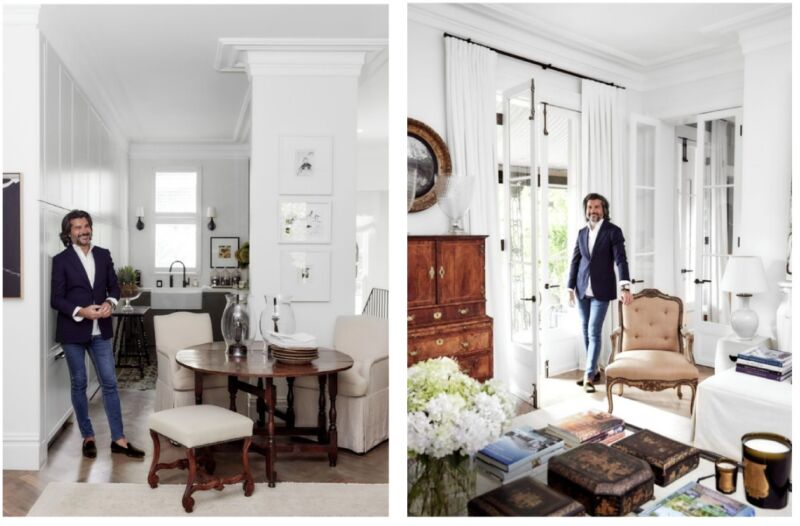
Every home has a story to tell, and the most captivating ones often mix styles and eras. A modern sofa beside a vintage armoire, or a minimalist room enhanced by the graceful lines of a Louis XV chair — these combinations create contrast, texture, and timeless appeal. Designers call this ornate minimalism,’ but for homeowners, it’s simply a beautiful way to make a space feel truly your own.

Today’s most inspiring interiors aren’t defined by one single style but by how thoughtfully they blend them. The secret lies in balance — the art of combining the craftsmanship, history, and romance of antiques or French-style furniture with the simplicity and functionality of modern design. As Australian interior designer Marco Meneguzzi puts it, “My aim is to create truly luxurious spaces that are both timeless and unquestionably liveable.”

Australian interior designer Marco Meneguzzi puts it, “My aim is to create truly luxurious spaces that are both timeless and unquestionably liveable.”

If you’ve ever wanted to achieve this look in your own home, here are a few expert insights and design secrets to guide you.

Why antiques add value to modern interiors

Antiques and French-style furnishings bring depth and character that modern pieces often can’t replicate. 

They introduce a sense of history and authenticity — a richness in patina, texture, and craftsmanship that balances the clean lines of contemporary design.

“Antiques can bring visual interest, warmth and legacy into a contemporary setting.” –Alexander Doherty

By layering the old and the new, you create a home that feels curated, lived-in, and uniquely personal — rather than looking like a brand-new showroom.

How to start mixing styles

Start small and intentional. 

Choose one or two standout antique or French-style pieces — such as an armoire,  sideboard, or console — and let them anchor the room. Keeping most of the surrounding décor modern maintains balance while allowing the antique to shine as a statement piece.

If you’re new to mixing styles, start with smaller accessories, such as a decorative mirror, side table, chandelier, or chair. These add a touch of heritage without overwhelming the space.

Always consider scale and function — pieces should feel proportionate to the room and functional in everyday life.

When mixing antiques in modern spaces, always consider scale and function — pieces should feel proportionate to the room and functional in everyday life.

Designer secrets for seamless blending of antiques in modern spaces

To make your mix of old and new feel cohesive rather than cluttered, interior designers use a few simple strategies:

  • Balance the ratio: Aim for about 70% modern to 30% antique pieces.
  • Mix, don’t match: Combine different woods and metals — for example, brass with matte black or walnut with light oak.
  • Ground ornate pieces: Use modern rugs, neutral walls, or simple lighting to integrate antiques naturally into the space.
  • Refresh details: Swap outdated hardware or lampshades for modern alternatives to tone down the traditional look and feel.
  • Embrace patina: Let the signs of age show — that’s where the charm and story lie.

Choose one or two standout antique or French-style pieces — such as an armoire, sideboard, or console — and let them anchor the room. Keeping most of the surrounding décor modern maintains balance while allowing the antique to shine as a statement piece.

How French-style pieces fit in

French-style furniture often features more ornamentation, curves, gilding, tapestry upholstery, or carved details than the clean-lined modern aesthetic. 

The key is restraint. 

Pair one elegant French hero piece with surrounding simplicity and restrained modern pieces to avoid visual clutter.

For example:

  • A Louis XV armchair beside a sleek, contemporary sofa.
  • An ornate console paired with modern lighting and minimalist décor.

This creates a striking visual moment without overwhelming the space.

Pair one elegant antique French hero piece with surrounding simplicity and restrained modern pieces to avoid visual clutter.

Room-by-room inspiration

Living Room:
Anchor the space with one standout antique or feature French piece — such as a decorative console, drinks cabinet, or coffee table — and surround it with clean-lined, modern furniture. Keep walls and floors neutral to let the craftsmanship stand out. Use a modern rug under an antique coffee table, or use a modern sofa around an antique sideboard repurposed as a media console.

Dining Room:
Pair a French or antique dining table with modern chairs for balance. 

Hang a simple, sculptural pendant light overhead and style your sideboard with contemporary ceramics or abstract art. Let an antique sideboard carry the antique weight; dress it with modern accessories (e.g., ceramic vases, modern art above it) to keep it fresh.

Bedroom or Home Office:
A mirrored headboard or an antique chest at the foot of the bed can be a welcome focal point in a modern bedroom. In a home office, an antique desk, paired with a modern ergonomic chair and minimalist shelving, perfectly marries style and function.  

By selecting antiques with purpose, updating or styling them cleverly, and surrounding them with contemporary furnishings and accents, you create a space that feels enriched and timeless rather than mismatched.

Interior decorator tips for a cohesive, intentional look

  • Create visual links: Repeat a material or colour between old and new pieces (e.g., brass accents or oak tones).
  • Give pieces space: Use negative space effectively and let statement antiques breathe — don’t crowd them.
  • Tell your story: If the piece is a family heirloom or has provenance, display it proudly as part of your home’s narrative.
  • Be patient: The best interiors evolve. Add, adjust, and layer gradually.
  • Stay harmonious: Play with contrast and character, but keep a consistent colour palette and scale.

By selecting pieces with purpose, updating or styling them cleverly, and surrounding them with contemporary furnishings and accents, you create a space that feels enriched and timeless rather than mismatched.

Bring your vision to life with The Crown Collection

Blending antiques or French-style pieces into modern interiors isn’t about pasting a period piece into a contemporary home and hoping it works. It’s about thoughtful curation — allowing craftsmanship, design, and emotion to coexist beautifully.

At The Crown Collection, you’ll find over 5,000 handpicked, authentic antiques and French-style furniture that perfectly bridge past and present. Each piece has been carefully selected for its beauty, heritage, and ability to complement contemporary living.

Visit our showroom at 20 Ballyclare Drive, Bryanston, or explore our collection online to discover how timeless craftsmanship can enhance your contemporary home.

The Crown Collection — where antiques meet modern design inspiration.


How to add French-style furniture to a modern minimalist home | Your top questions answered

Categories: Articles, Blog, Style|Tags: , , , , |

There’s a growing trend reshaping contemporary interiors: blending antiques—especially French pieces—with modern minimalist design. Homeowners are rediscovering how the craftsmanship, elegance, and patina of French-style furniture bring warmth, character, and timeless sophistication into even the most pared-back spaces. 


In design circles, the art of mixing eras—particularly French antiques with clean, contemporary interiors—is more celebrated than ever.

It’s a combination that brings soul to simplicity, romance to restraint, and timeless craftsmanship to the quiet elegance of minimalist living.

But as more homeowners opt for the curves of a Louis XV chair or a decorative gilded mirror to soften their modern edges, obvious questions arise. How do you add heritage without heaviness? Character without clutter?

“Rawness and refinement are not opposite ends of a luxurious spectrum. They are two complementary features with which to populate a luxe environment.” -Kelly Wearstler

French pieces, with their sculptural silhouettes and artisanal touches, become striking focal points in a pared-back environment.

If you’re eager to fuse French charm with contemporary clarity, here are the top questions style-conscious homeowners ask—with design-forward answers.

#1 Will French antiques clutter my minimalist aesthetic?

Surprisingly, no. Minimalism isn’t about owning nothing—it’s about owning the right things. 

French pieces, with their sculptural silhouettes and artisanal touches, become striking focal points in a pared-back environment. 

For an introductory overview of the ornate minimalism design trend, read this blog.

Place one standout piece — a curvy fauteuil, a rustic French farm table, or a gilded trumeau mirror — and let it breathe. The surrounding simplicity turns the antique into art.

#2 How do I maintain a modern look when French pieces tend to be ornate?

Balance is the secret when incorporating decorative details into contemporary spaces. 

French Rococo curves and carved florals pair beautifully with the calm, disciplined lines of contemporary design. 

Balance is the secret when incorporating decorative details into contemporary spaces. French Rococo curves and carved florals pair beautifully with the calm, disciplined lines of contemporary design.

Let your antique shine against clean architecture or streamlined furniture. A Louis XVI side table beside a modern sofa is wildly chic when the rest of the space stays intentional. 

Juxtaposition is powerful. The deliberate pairing of a raw, bleached French antique table with modern, minimalist chairs, or a sleek, contemporary sofa with an ornate French chandelier, creates an unusual but satisfying visual interest.

#3 What colour palette works best with French antiques in a minimalist setting?

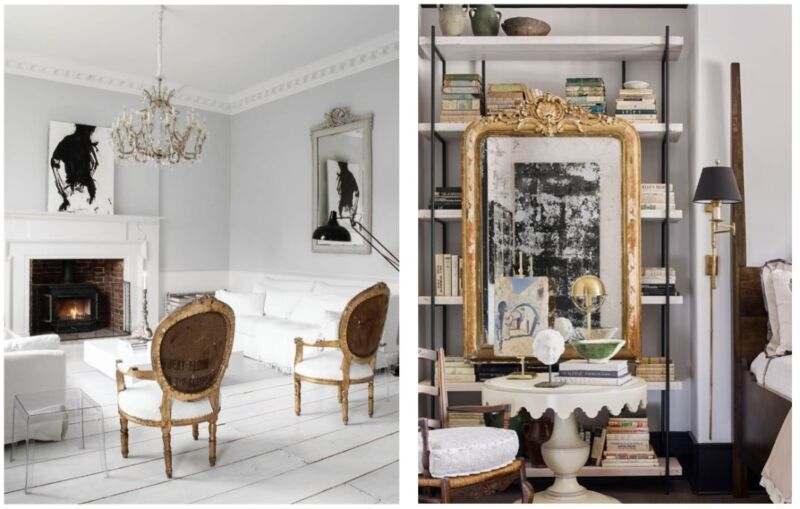
Neutrals reign. Soft whites, muted creams, cool greys, gentle taupes, and chalky pastels help antiques harmonise with contemporary surroundings.  These tones highlight patina and aged finishes without overwhelming the space. 

For understated drama, pair a gilt mirror with charcoal walls –  it’s moody, modern, and undeniably French.

When adding French-style furniture to modern spaces, Neutrals reign. Soft whites, muted creams, cool greys, gentle taupes, and chalky pastels help antiques harmonise with contemporary surroundings. These tones highlight patina and aged finishes without overwhelming the space.

#4 Can I mix different French styles?

Absolutely – if they share a visual thread. Designers often unify pieces through colour, wood tone, scale, or upholstery.

The romance of Louis XV sits beautifully beside the structure of Louis XVI when finishes complement each other, while French Provincial adds rustic authenticity almost anywhere.

This blog provides a straightforward breakdown of three popular French decor styles.

#5 How can I style antiques without over-accessorising?

Think editorial, not crowded

Let each piece become a ‘moment’—a single candlestick on a sleek console or a blue-and-white jug on a minimalist shelf. 

In a contemporary interior, restraint honours the craftsmanship of antiques. 

In a contemporary interior, restraint honours the craftsmanship of French antiques.

#6 Will antiques look out of place in an open-plan home?

Not at all. French antiques can define zones within an open-plan layout:
– A Provincial table anchors a dining area
– A tall armoire adds height
– A gilded mirror grounds an expansive wall

Consider proportion and choose pieces that match the room’s scale.

#7 Are French antiques practical for everyday living?

Yes. Many French pieces were built to survive centuries of use. 

Oak armoires, Rococo beds, chaise lounges, farmhouse tables, and ladder-back chairs were made for family life, not museum display. 

For more delicate pieces, such as fauteuil chairs, use them in accent roles—beautiful and functional, but not subjected to the daily wear of lounge seating.

#8 How do I blend French antiques with modern art and lighting?

With enthusiasm. The interplay is where the magic happens.

Consider proportion and choose French pieces that match the room’s scale.

A bold contemporary painting above a Louis XV chest creates a dynamic, gallery-like vignette.

A minimalist pendant light over a rustic farm table keeps the look grounded and fresh. Modern lighting, in particular, does wonders to keep antiques from feeling dated.

#9 Which French accessories work best in a minimalist home?

Curated pieces with authenticity and soul—never theme-heavy décor. 

A few suggestions for a successful design start:

  • Gilded antique wall mirrors
  • Brass or crystal sconces
  • Aged confit pots
  • Wrought-iron candlesticks
  • Natural French linens

Each brings history without overwhelming the calm.

Many French pieces were built to survive centuries of use. Oak armoires, Rococo beds, chaise lounges, farmhouse tables, and ladder-back chairs were made for family life, not museum display.

#10 How do I make sure French antiques don’t look “stuffy”?

Lighten them up.

Reupholster a Louis XVI chair in stone-coloured linen, pair a gilt mirror with natural jute, or place an ornate side table next to an ultra-modern sofa. Contrast creates freshness. When styled with simplicity, even the most elaborate French antique feels unexpectedly cool.

Our in-house restoration team can stain, upholster, bleach, gild, or decolour any item from our curated inventory to achieve your desired look. 

#11 Should I restore or keep the patina?

Patina is priceless. Restore only if the structure is compromised. Otherwise, cherish every mark—aged finishes bring depth that brand-new pieces cannot.

Patina is priceless. Restore only if the structure is compromised. Otherwise, cherish every mark—aged finishes bring depth that brand-new pieces cannot.

#12 How many French antiques can a minimalist home handle?

Far fewer than you think—and that’s the beauty.
Think of antiques as anchors:

  • A small apartment: 1–2 statement pieces
  • A medium home: 2–4 thoughtfully placed pieces throughout
  • A large home: up to 5–6, each with room to shine

Minimalism isn’t about scarcity—it’s about intentionality.

Incorporating French antiques into a modern home isn’t about recreating a French Chateau or a Parisian pied-à-terre — it’s about layering a historical narrative with restraint and elegance. When thoughtfully placed, each antique makes a minimalist space feel richer, warmer, and unmistakably personal.

Discover the timeless elegance of the Crown Collection—shop exquisite French-style furniture and antiques online or visit us in-store to find your perfect statement piece today.

The ‘brown furniture’ trend | The future of sustainable interior design

Categories: Articles, Blog, Style|Tags: , , , , |

There’s something quietly revolutionary happening in the world of interior design. After years of cool-toned minimalism, whitewashed palettes, and factory-made furniture, brown furniture — the rich, character-filled wood pieces that once graced our grandparents’ homes — is making a powerful comeback. But this revival isn’t just about nostalgia. It’s a celebration of authenticity, craftsmanship, and sustainability.


But what exactly is ‘brown furniture’ — and is it the same as antiques?

Brown furniture explained

The term often brings antique pieces to mind, and while there is some overlap, the two aren’t identical. 

‘Brown furniture’ refers mainly to the look and material — traditional wood furniture made from warm-toned woods such as mahogany, oak, teak, walnut, or cherry. These pieces can be true antiques, mid-century or vintage items, and even newly-crafted pieces, as long as they showcase that rich, classic, solid-wood aesthetic in contrast to today’s lighter, painted, or minimalist furniture.

On the other hand, antiques are defined by age and history — generally, anything over 100 years old. They often carry distinctive craftsmanship, period detailing, and historical value.

So, while many antiques are indeed ‘brown furniture,’ not all brown furniture qualifies as an antique.

For example:

  • A Victorian mahogany chest (1800s) → brown furniture and antique
  • A 1950s walnut credenza → brown furniture, vintage, not antique
  • A modern oak dining table inspired by Georgian design → brown furniture, modern

Designers and collectors today prefer using the term ‘brown furniture’ because it feels more contemporary, approachable, and inclusive. It highlights the warmth, texture, and craftsmanship of wood furniture — without the old-fashioned connotations that sometimes accompany the word “antique.

In essence, ‘brown furniture’ is the new language of old-world craftsmanship — reframed for 21st-century homes.

 'Brown furniture' is the new language of old-world craftsmanship — reframed for 21st-century homes.

The new ‘brown furniture’ revival

Once dismissed as old-fashioned, brown furniture is being redefined as timelessly chic. Designers, collectors, and homeowners are rediscovering its enduring beauty and giving it a fresh context in modern spaces.

“There has been a noticeable return to ‘old school’….or even ‘grandmillenial’. Plus, wood furniture has a place in just about every room.” -Meg Graff, Designer

Modern homeowners are craving pieces with soul; pieces that speak for themselves. And that’s exactly what this furniture genre delivers. Each antique, retro or vintage item carries history, warmth, and individuality. The patina on an 18th-century oak lowboy or the gentle wear on a mid-century walnut cabinet tells a story that flat-packed or mass-produced furniture never could.

Designers and collectors now use ‘brown furniture’ to describe any well-crafted, timeless wooden piece — whether it’s antique or not — as a way to highlight:

  • Warmth and texture in interiors
  • Sustainable, long-lasting quality
  • Mix-and-match versatility with modern décor

The rise in its popularity

There’s also a pragmatic reason behind this furniture trend — it’s available.

No long lead times. No supply chain delays. No compromise on quality. 

These classic pieces are ready to be loved again — and they’re built to last. The craftsmanship is unmatched, often handcrafted from solid mahogany, walnut, or oak, using joinery techniques that have stood the test of time.

The craftsmanship of antiques and mid-century furniture is unmatched, often handcrafted from solid mahogany, walnut, or oak, using joinery techniques that have stood the test of time.

Beyond beauty, there’s sustainability. Choosing antique or vintage furniture is one of the most eco-friendly decor decisions you can make. These pieces already exist, so there’s no additional environmental cost. And because they’re built from durable hardwoods, they can last for centuries — not just a few seasons. In an era where sustainability is key, brown furniture isn’t just stylish — it’s responsible.

How to style ‘brown furniture’ in contemporary homes

Modern interior designers are proving that brown furniture can feel fresh, not fussy, adding gravitas to any modern space. 

The secret lies in the mix. 

Pairing a modern abstract painting over an antique secretaire chest of drawers, console, or sideboard is striking.

The contrast between sleek contemporary art and a richly toned wood surface creates instant sophistication — a look that feels grounded, curated, and timeless.

The contrast between sleek contemporary art and a richly toned wood surface creates instant sophistication — a look that feels grounded, curated, and timeless.

Even mid-century modern furniture is seeing renewed demand. Large teak or rosewood sideboards from the 1960s and 1970s fit perfectly beneath today’s oversized TVs. They provide a central focal point in a room, adding balance, thoughtful layering, and warmth to open-plan spaces.

More than a trend | A return to meaningful living

The rise of brown furniture signals more than a design shift — it’s a movement toward intentional living. 

Homeowners are shifting away from disposable décor and opting for pieces that tell a story, reflect craftsmanship, and stand the test of time.

As our Crown Collection founder explains, “People want spaces that feel lived in, not staged. Brown furniture brings that feeling effortlessly. It’s not just décor — it’s character.”

And with The Crown Collection’s global shipping service, you can bring that warmth, craftsmanship, and history home — wherever you are in the world.

Explore our curated selection of antique brown furniture at The Crown Collection, available online or in-store. 

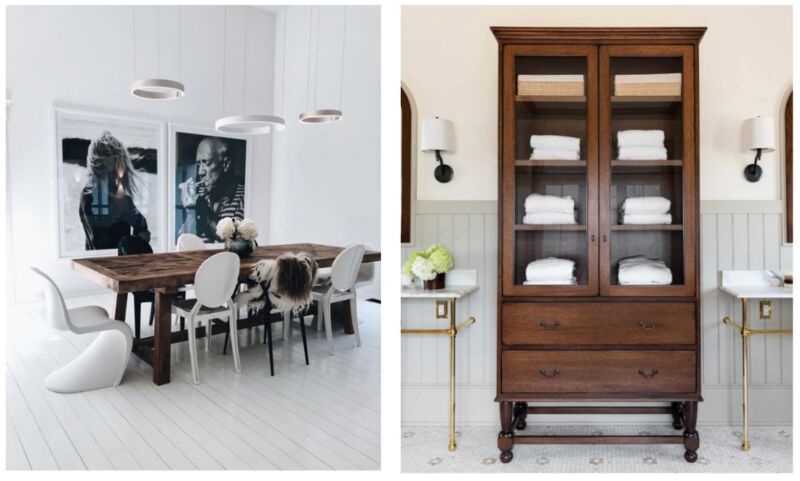
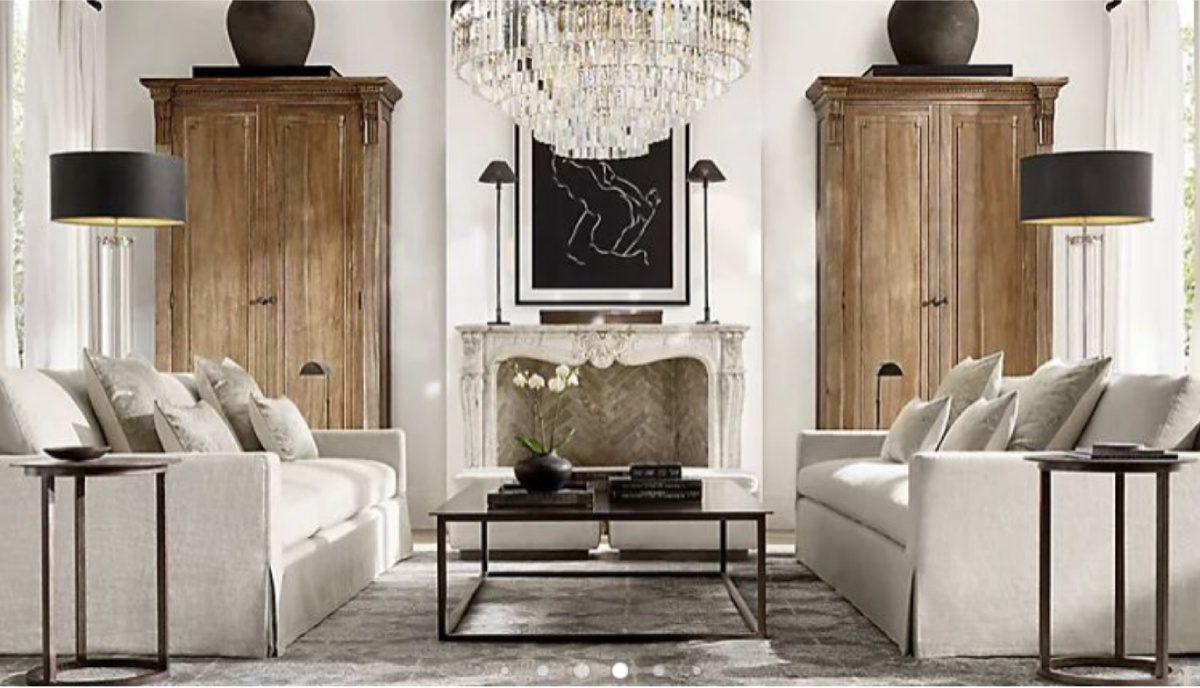
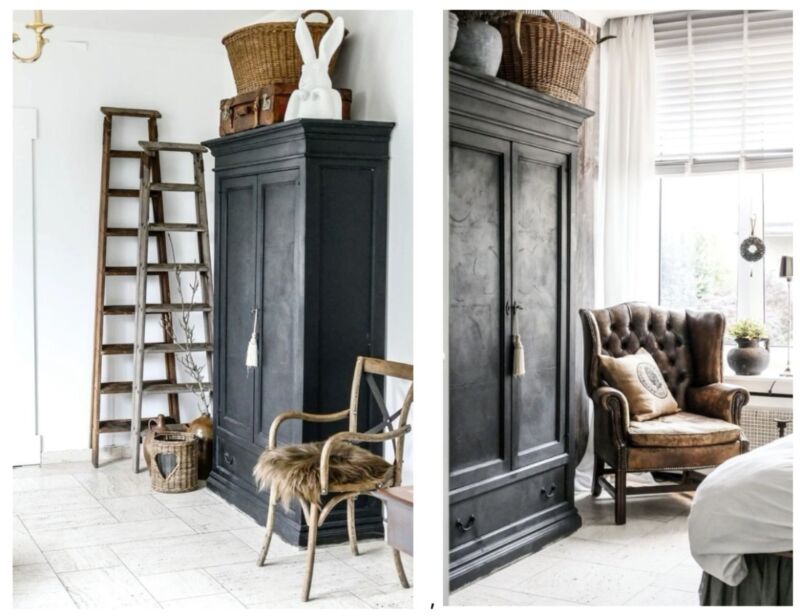
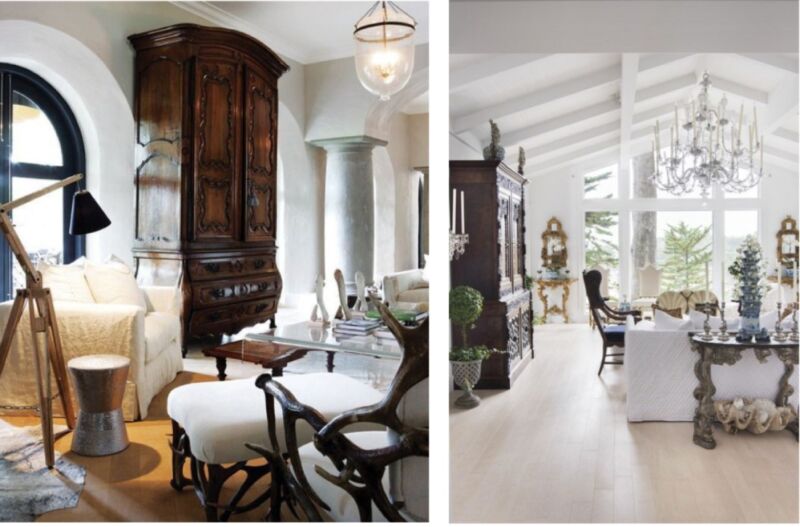
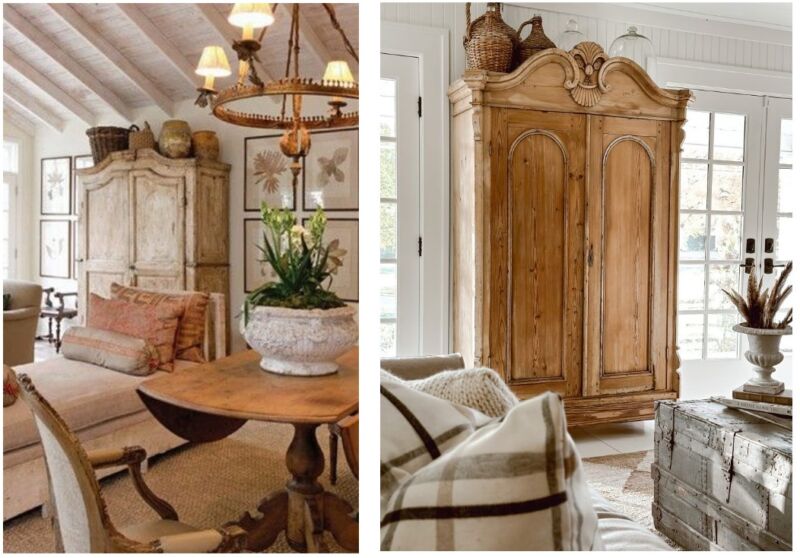
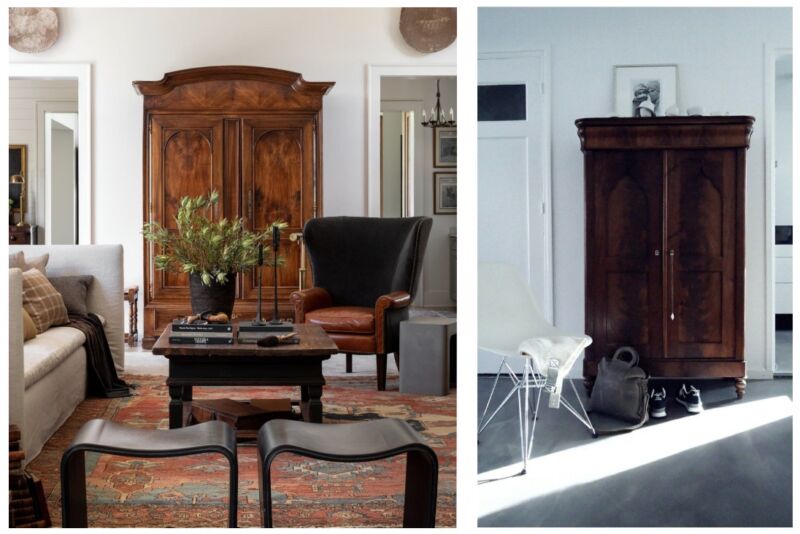
A guide to antique armoires & adding them to contemporary spaces

Categories: Articles, Blog, Style|Tags: , , , |

Every home tells a story. For those who value beauty, history, and personality, an antique ‘armoire’ – French for ‘cupboard’ – is one of the most powerful pieces you can invest in. Bold, practical, and timeless, it becomes a striking statement in a world of sleek, mass-produced furniture.


An armoire commands attention, anchoring a room with scale, craftsmanship, and character that contemporary furniture often lacks. Featuring carved details, panelled doors, and rich woods – each one tells a unique story of artistry and design heritage. 

In contemporary homes where clean lines dominate, an armoire – whether French, English, or Dutch in origin – introduces warmth, texture, and personality. Its grandeur can soften modern minimalism or serve as a striking counterpoint in a minimalist, pared-down space.

 The grandeur of an antique armoire can soften modern minimalism or serve as a striking counterpoint in a minimalist, pared-down space.

The perfect antique element to add to your home

When placed thoughtfully, an antique armoire balances out modern spaces, brings warmth to open-plan living, and adds a sense of permanence to transitional décor. 

A richly carved or bleached French provincial piece or a simple Georgian design adds authenticity and elegance that enhances and ‘holds court’ in every room.

Armoires remain grand, practical, and enduringly stylish, proving that furniture can be both functional and a conversation piece—an investment worth every cent for those who value beauty, quality, and timeless design.

Why collectors value armoires

Carrying a higher price tag than mass-produced alternatives, antique armoires are not casual purchases. Each piece is handcrafted from solid wood, featuring traditional joinery and details that have withstood the test of time, ageing beautifully over centuries to develop a unique patina that cannot be replicated. This patina lends each armoire its own character and sense of history. 

These heirloom-quality investments endure for generations and appreciate in both aesthetic and financial value. More than storage, they help curate a home layered with depth, sophistication, and authenticity

An armoire is a work of art, a practical solution, and a bold design statement – transcending décor trends while harmonising beautifully with contemporary interiors.

For discerning collectors of fine antiques, design-forward homeowners, or connoisseurs of craftsmanship, an armoire is a significant hero piece. It represents history, artistry, legacy, and timeless design brought into daily life.

For collectors of fine antiques, design-forward homeowners, or connoisseurs of craftsmanship, an armoire is a significant hero piece

Presence and provenance

An antique armoire defines a room—its scale draws the eye, its artisanal elements invite inspection, and its history adds depth.  Understanding the provenance of an antique armoire, however,  is key to appreciating its full value. 

Provenance speaks to a piece’s history—its origin, craftsmanship, ownership, and journey through time—which not only enhances its authenticity but also its desirability as a collectable.

An armoire with documented provenance carries a narrative of heritage and artistry. It enriches your home with depth and meaning beyond aesthetics, and enhances both its value and your appreciation of the piece. When placed in a contemporary setting, such a piece becomes more than a striking design element; it becomes a conversation starter, a tangible link to the past that adds sophistication and individuality to modern interiors. 

When investing in an antique armoire, provenance can significantly safeguard your investment, enhancing both its value and your appreciation of the piece

Beyond their looks | Practical versatility in every room

In contemporary interiors, antique armoires create a striking contrast: warmth against minimalism, ornamentation against restraint, permanence against the fleeting trends of fast décor.

Consider them lasting design elements, serving as anchor pieces that harmonise beautifully within both traditional and modern schemes.

The true value of an antique armoire lies in its adaptability—far beyond the bedroom:

  • In the living room | An armoire doubles as a stylish hideaway for media equipment, books, board games, or even as a drinks cabinet. 
  • In the dining room | It becomes an elegant cabinet for linens, silverware, and glassware
  • In a home office | Armoires conceal printers, files, or supplies while keeping the room refined and elegant
  • In a hallway or entryway | It offers both storage and a dramatic welcome for guests.
  • In bedrooms | Armoires serve as a space to store extra bedding or even as a modern wardrobe solution where closets are limited.

This décor versatility ensures that an armoire is not just a good looker—it’s a functional investment that grows with your lifestyle.

Looking for an armoire? At The Crown Collection, we have a curated collection or armoires in various styles.

Armoires at the Crown Collection Décor Store 

At The Crown Collection, we have magnificently honed our collection with an eclectic combination of decorative antiques, contemporary and classic styles. Each handpicked heritage piece is built to endure for centuries and to enrich the homes of discerning collectors. 

For those on the hunt for an armoire, each armoire in our collection reflects the finest traditions of European furniture-making –  from 18th-century French examples with ornate carvings and Dutch options with marquetry, and curved silhouettes to restrained English pieces in rich mahogany. 

We invite you to explore our current collection and discover the perfect armoire pairing for your space.

Go to Top